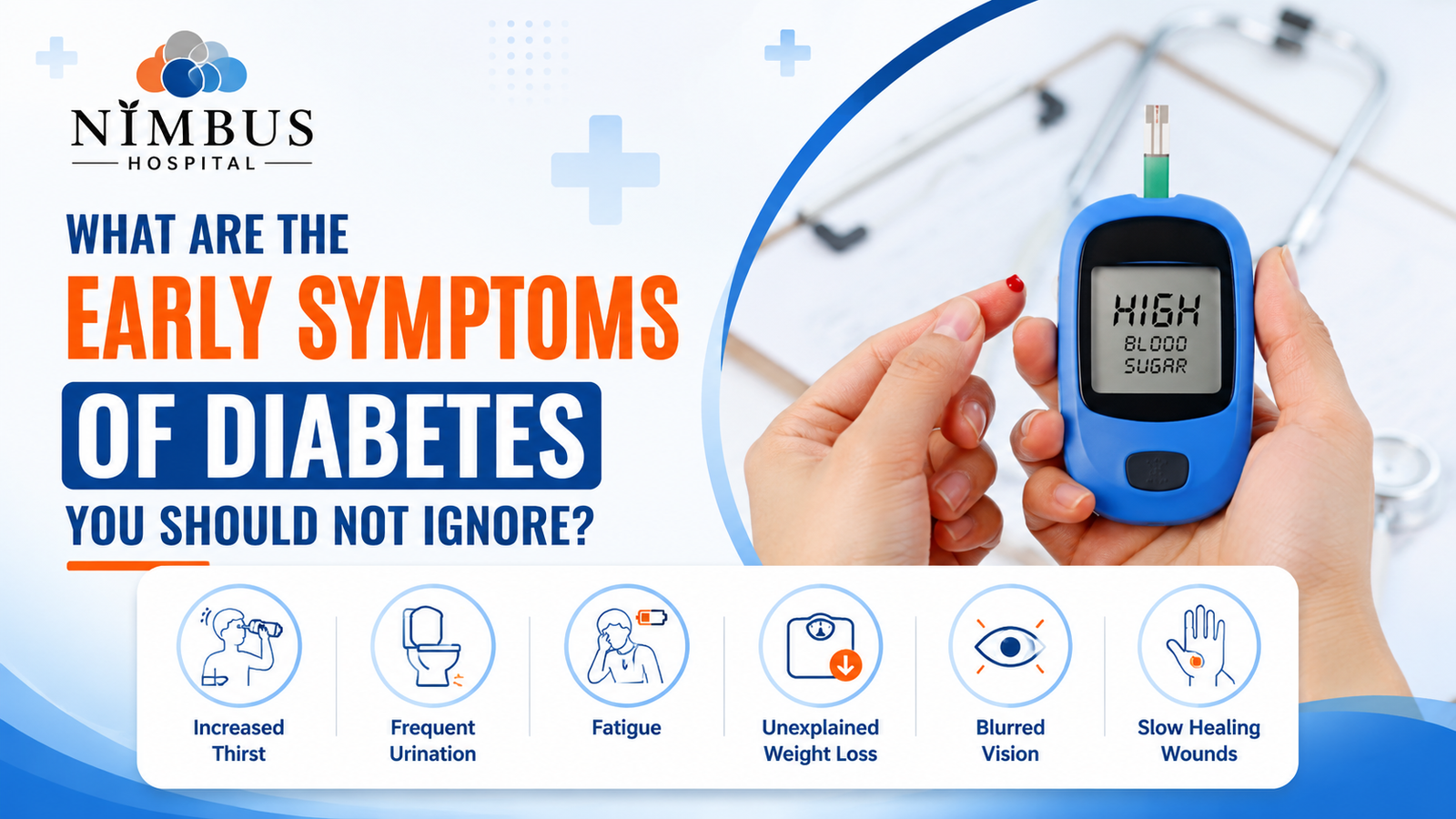
Diabetes can sometimes develop quietly, with symptoms that may look like normal tiredness, dehydration or changes in routine. Frequent urination, excessive thirst, unexplained weight loss, constant fatigue and blurred vision are some signs that should not be ignored. If these symptoms continue or occur together, getting your blood sugar checked is a sensible first step. At Nimbus Hospital, patients looking for Best Diabetes Treatment in Solan can access diabetes care through the MD Medicine department, along with diagnostic facilities and personalised treatment planning.
What Is Diabetes?
Diabetes is a condition in which blood glucose levels remain higher than normal because the body does not produce enough insulin, does not use insulin effectively, or both. Over time, uncontrolled blood sugar can affect different parts of the body.
The important thing is that diabetes is not diagnosed only from symptoms. A doctor may consider your symptoms, medical history, risk factors and appropriate blood tests before confirming a diagnosis.
Nimbus Hospital’s MD Medicine department specifically lists diabetes among the lifestyle and metabolic conditions it manages. Its approach includes clinical evaluation, targeted investigations, personalised treatment, diet and lifestyle guidance, and follow-up monitoring.
Early Symptoms of Diabetes You Should Watch For
1. Frequent Urination
Needing to urinate more often than usual can be an early warning sign of high blood sugar. Some people may also notice that they are waking up several times at night to use the bathroom.
If frequent urination continues without an obvious reason, especially when combined with increased thirst, fatigue or weight changes, it is worth discussing with a doctor.
2. Excessive Thirst
Persistent thirst is another symptom that deserves attention. You may feel the need to drink water repeatedly even when you have not been exercising or spending time in excessive heat.
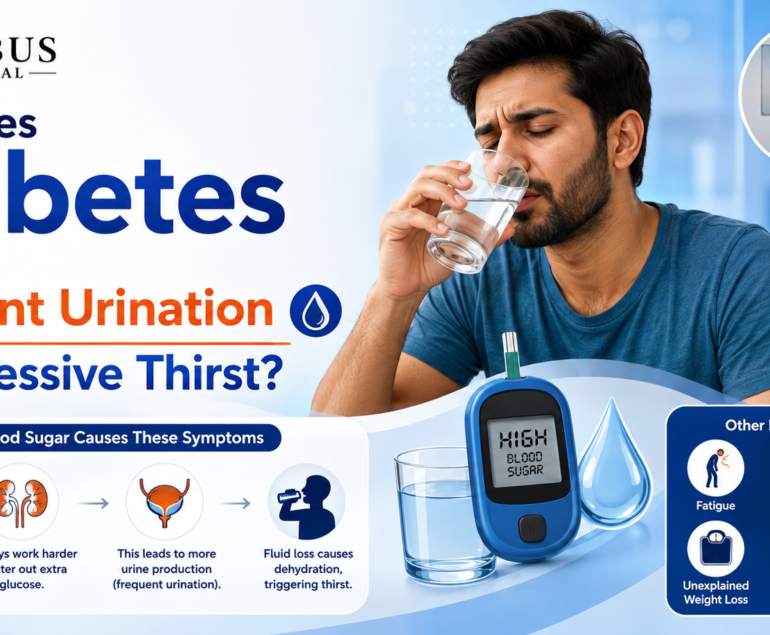
Frequent urination and excessive thirst can occur together because elevated blood glucose can cause the body to lose more fluid through urine.
However, thirst can have many causes. A medical evaluation is needed to determine whether diabetes or another condition is responsible.
3. Unexplained Weight Loss
Losing weight without intentionally changing your diet or physical activity should not be ignored.
When glucose cannot be used properly for energy, the body may start using stored fat and muscle instead. This can contribute to unexpected weight loss.
If weight loss occurs along with excessive thirst, frequent urination or unusual tiredness, consider getting a medical evaluation rather than assuming it is simply due to stress or a busy lifestyle.
4. Persistent Tiredness
Everyone feels tired sometimes. But persistent fatigue that does not improve with proper sleep and rest can be a reason to investigate your health.
When blood glucose is not being used effectively, some people may experience weakness, low energy or difficulty concentrating.
Nimbus Hospital’s MD Medicine service evaluates general weakness and fatigue along with chronic conditions such as diabetes, thyroid disorders and other metabolic problems.
5. Blurred Vision
Changes in blood sugar can affect vision and may result in temporary blurred vision.
Do not automatically blame repeated vision changes on mobile phones, computers or lack of sleep. If blurred vision keeps returning, especially alongside other possible diabetes symptoms, speak with a healthcare professional.
Sudden or severe vision changes require prompt medical attention.
6. Increased Hunger
Some people may experience increased hunger even after eating.
This can happen when glucose is not being effectively utilised by the body’s cells. Increased hunger alone does not mean that you have diabetes, but it can be more significant when it occurs with thirst, frequent urination, fatigue or unexplained weight loss.
7. Slow-Healing Wounds
Cuts and minor wounds that take unusually long to heal can sometimes be associated with prolonged high blood sugar.
If you repeatedly notice slow healing, recurring infections or other unusual skin problems, do not rely only on home remedies. A doctor can assess whether blood sugar or another underlying issue may be contributing.
8. Tingling or Numbness
Tingling, burning or numbness in the hands and feet can have several possible causes.
Diabetes can affect nerves when blood sugar remains poorly controlled over time. If these sensations are persistent or recurring, medical evaluation can help identify the actual cause.
Why Early Diabetes Detection Matters
Ignoring diabetes symptoms does not make them disappear. If blood sugar remains high for a long period, it can increase the risk of complications affecting the heart, kidneys, eyes, nerves and other organs.
Early evaluation allows a doctor to understand your current health status and decide whether lifestyle changes, medicines, monitoring or further investigations are appropriate.
Nimbus Hospital follows a structured care journey through consultation and history, investigations when required, diagnosis and treatment planning, followed by monitoring and follow-up. This approach is particularly useful for chronic conditions such as diabetes, where ongoing management can be more important than a one-time consultation.
How Is Diabetes Diagnosed?
Symptoms alone cannot confirm diabetes. Blood sugar testing and other investigations may be recommended based on your symptoms and medical history.
Nimbus Hospital has a computerized pathology laboratory and provides blood tests, including sugar profiles. The hospital also offers home sample collection, which can make routine investigations more convenient for patients.
Depending on the patient’s condition, doctors may recommend other investigations as well. The purpose is to understand the patient’s health rather than simply treating one symptom in isolation.
Diabetes Treatment at Nimbus Hospital
Diabetes management is different for every patient. Your treatment can depend on factors such as blood sugar levels, age, lifestyle, existing medical conditions, medicines and overall health.
At Nimbus Hospital, diabetes is managed through its MD Medicine department. The hospital describes its approach as personalised treatment based on clinical evaluation and targeted investigations. Treatment may include medication, lifestyle planning, diet guidance and regular monitoring, depending on the patient’s needs.
This patient-specific approach is important because diabetes management should not be based on a one-size-fits-all plan.
Why Choose Nimbus Hospital for Diabetes Care?
Experienced Medical Care
Nimbus Hospital’s MD Medicine department provides adult and elderly healthcare and specifically manages diabetes, thyroid disorders, obesity and metabolic syndrome.
Diagnosis and Treatment Under One Roof
The hospital combines consultation with diagnostic support, including pathology services, sugar profiles, ECG, X-ray and other investigations as recommended.
Personalised Treatment Plans
Nimbus Hospital states that treatment plans are tailored according to the patient’s condition, medical history, lifestyle and health requirements. Its MD Medicine service includes medication, lifestyle planning, diet guidance and follow-up monitoring.
Follow-Up and Long-Term Monitoring
Diabetes requires ongoing attention. Nimbus Hospital’s care journey includes monitoring and follow-up, allowing treatment and lifestyle guidance to be reviewed according to the patient’s response.
Patient-First Approach
The hospital highlights clear diagnosis, honest guidance and supportive follow-up as part of its patient-first approach. It also provides home sample collection and an in-house pharmacy for added convenience.
24×7 Emergency Support
Nimbus Hospital provides 24×7 emergency services with rapid triage, stabilisation, diagnostic support and ICU/HDU backup when required. For serious symptoms such as unconsciousness, severe breathlessness, chest pain or other emergencies, immediate medical care is important.
When Should You See a Doctor?
Do not wait for symptoms to become severe before seeking medical advice. Consider consulting a doctor if you have persistent excessive thirst, frequent urination, unexplained weight loss, unusual fatigue, repeated blurred vision or other symptoms that concern you.
People with risk factors or a family history of diabetes may also benefit from discussing appropriate screening with a healthcare professional.
Most importantly, avoid starting or stopping diabetes medicines on your own. Your treatment should be based on proper medical assessment and monitoring.
Final Thoughts
Early diabetes symptoms can be easy to overlook, particularly when they develop gradually. Frequent urination, excessive thirst, unexplained weight loss, fatigue, blurred vision, increased hunger, slow-healing wounds and tingling sensations can all be reasons to seek medical advice.
The presence of one symptom does not necessarily mean you have diabetes. But when symptoms persist or several appear together, timely evaluation can help identify the underlying cause.
For people seeking Best Diabetes Treatment in Solan, Nimbus Hospital offers MD Medicine consultation, diabetes management, diagnostic support, personalised treatment and ongoing follow-up. Its patient-first approach combines clinical evaluation, appropriate investigations and long-term care under one roof.
FAQ’s
1. What are the early signs of diabetes?
Frequent urination, thirst, fatigue and unexplained weight loss are common signs.
2. Can diabetes have no symptoms?
Yes, some people may have diabetes without noticeable symptoms.
3. When should I check my blood sugar?
Check it if symptoms persist or you have diabetes risk factors.
4. Can diabetes cause blurred vision?
Yes, changes in blood sugar can affect vision.
5. Can diabetes be treated permanently?
Diabetes can often be effectively managed with proper medical care and monitoring.