
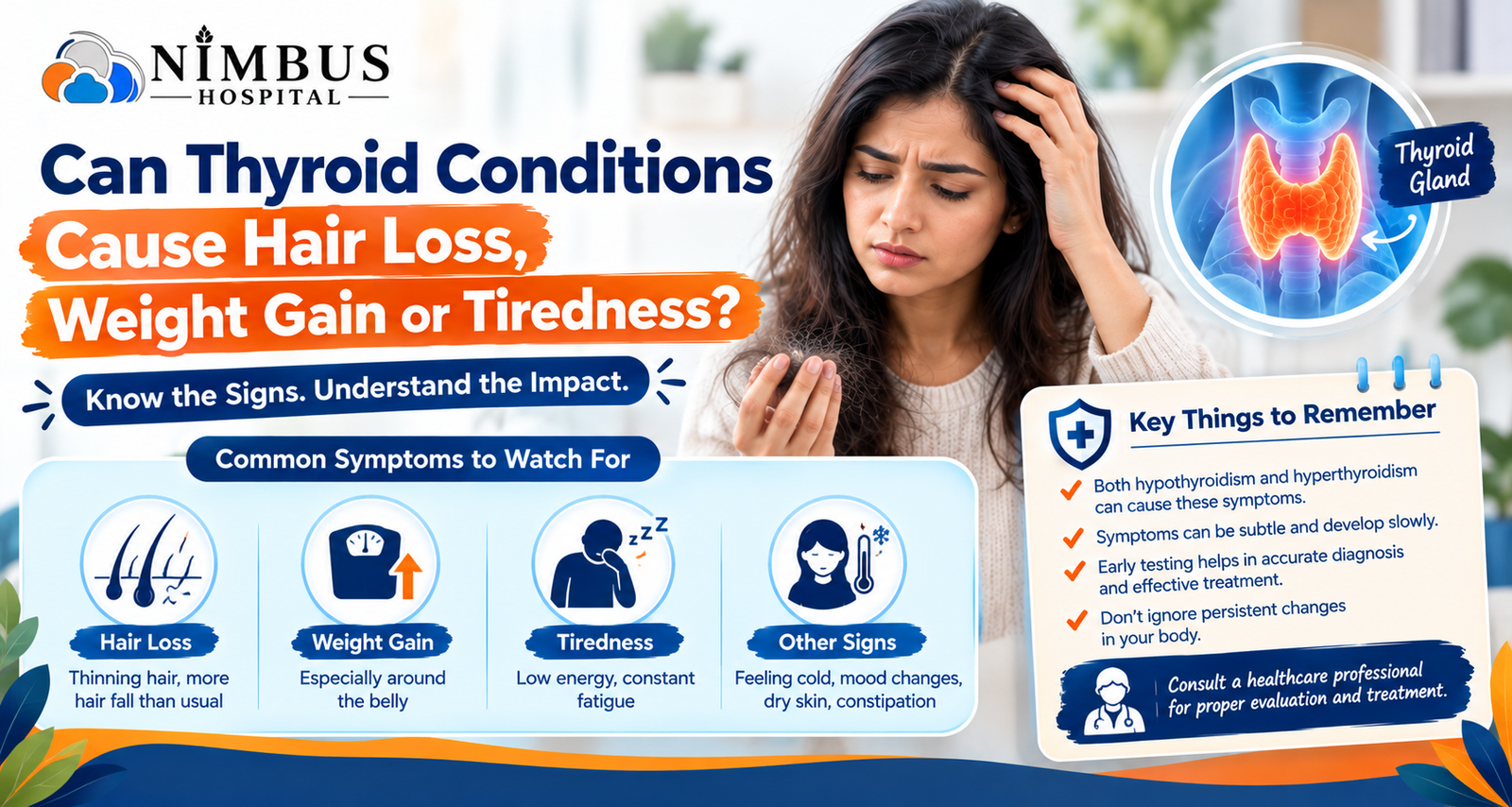
Hair loss, unexplained weight changes and constant tiredness are common concerns, but sometimes these symptoms can be linked to an underlying thyroid problem. The thyroid gland produces hormones that influence metabolism, energy levels, body temperature and several other functions. When thyroid hormone levels become too low or too high, the body can respond in noticeable ways. At Nimbus Hospital, people looking for Thyroid Treatment in Solan can receive clinical evaluation, thyroid testing and personalised treatment based on their symptoms and medical history.
How Can Thyroid Problems Affect the Body?
The thyroid is a small gland in the neck, but its hormones influence many important body functions. When thyroid hormone production is too low, a condition known as hypothyroidism may develop. When the thyroid produces too much hormone, it can lead to hyperthyroidism.
Both conditions can cause symptoms, although they may differ from person to person.
Common thyroid-related symptoms can include:
- Unexplained weight gain or weight loss
- Persistent tiredness or low energy
- Hair thinning or increased hair fall
- Feeling unusually cold or hot
- Changes in heart rate
- Sleep problems
- Changes in mood
- Constipation or frequent bowel movements
- Dry skin
- Difficulty concentrating
These symptoms can also occur because of many other health conditions, so having one or more of them does not automatically mean you have a thyroid disorder.
Can Thyroid Problems Cause Hair Loss?
Yes, thyroid disorders can sometimes contribute to hair thinning or increased hair shedding.
Changes in thyroid hormone levels can affect the normal hair-growth cycle. Some people may notice overall thinning rather than hair loss in one specific area. Hair may also become dry or brittle.
However, hair loss has many possible causes, including nutritional deficiencies, stress, hormonal changes, certain medications and scalp conditions. If hair fall continues, it is better to identify the underlying cause instead of assuming that the thyroid is responsible.
Can an Underactive Thyroid Cause Weight Gain?
An underactive thyroid can contribute to weight gain because reduced thyroid hormone levels can slow the body’s metabolism. Some people may also experience tiredness, reduced physical activity, constipation or fluid retention.
However, thyroid problems are not the only reason for weight gain. Diet, physical activity, sleep, medications, hormonal conditions and metabolic health can also play a role.
This is why proper assessment is important before starting any thyroid medication or restrictive diet.
Why Does Thyroid Disease Make You Feel Tired?
Persistent tiredness is one of the symptoms that may occur with an underactive thyroid. When thyroid hormone levels are low, some body processes slow down, which can contribute to low energy and reduced stamina.
But fatigue is a very general symptom. Anaemia, diabetes, sleep problems, infections, nutritional deficiencies, stress and several other conditions can also cause tiredness.
Nimbus Hospital’s MD Medicine department evaluates thyroid disorders as well as general weakness and fatigue, helping doctors consider the wider clinical picture rather than focusing on a single symptom.
What Are Other Signs of an Underactive Thyroid?
Hypothyroidism may develop gradually, so some people may not immediately recognise the symptoms.
Possible symptoms include:
- Weight gain
- Tiredness and low energy
- Hair thinning
- Dry skin
- Feeling cold more often
- Constipation
- Slow heart rate
- Difficulty concentrating
- Mood changes
- Muscle weakness or aches
The severity and combination of symptoms can vary. Some people have only mild symptoms, while others experience several changes at the same time.
What Are the Signs of an Overactive Thyroid?
An overactive thyroid can produce a different pattern of symptoms because the body’s metabolism may become faster.
Possible symptoms include:
- Unexplained weight loss
- Increased sweating
- Feeling unusually hot
- Fast or irregular heartbeat
- Anxiety or restlessness
- Difficulty sleeping
- Increased bowel movements
- Muscle weakness
- Increased appetite
If these symptoms occur repeatedly, medical evaluation can help determine whether thyroid dysfunction or another condition is responsible.
How Are Thyroid Problems Diagnosed?
Symptoms alone cannot confirm a thyroid disorder. A doctor may first review your symptoms, medical history, medications, lifestyle and family history.
Blood testing can then help assess thyroid function. Depending on the situation, doctors may recommend thyroid-related blood tests such as TSH and thyroid hormone testing.
Nimbus Hospital’s MD Medicine department provides thyroid testing through its pathology laboratory and follows a structured process of consultation, targeted investigations, diagnosis, treatment and follow-up.
This approach helps avoid unnecessary testing while ensuring that important symptoms are properly investigated.
How Are Thyroid Conditions Treated?
Treatment depends on whether the thyroid is underactive, overactive or affected by another thyroid condition.
For an underactive thyroid, doctors may prescribe thyroid hormone replacement and monitor blood levels regularly. The dose may need adjustment over time.
Treatment for an overactive thyroid depends on its cause and severity and may involve medication or referral for additional specialist care when appropriate.
Along with medication, regular monitoring is important because thyroid hormone requirements can change over time.
Do not start, stop or change thyroid medication without medical advice.
Why Choose Nimbus Hospital for Thyroid Care?
Thyroid problems can affect several areas of health, so a complete medical assessment is useful when symptoms such as weight changes, fatigue and hair loss occur together.
Nimbus Hospital’s MD Medicine department manages thyroid disorders as part of its adult and chronic disease care. The hospital focuses on clinical evaluation, targeted investigations, personalised treatment, diet and lifestyle guidance, and regular follow-up.
Nimbus Hospital also provides:
- Thyroid blood testing
- Computerised pathology laboratory
- MD Medicine specialist consultation
- Personalised treatment planning
- Lifestyle and diet guidance
- Regular follow-up and monitoring
- Multispecialty support when required
- 24×7 emergency support and ICU/HDU backup
The hospital describes its overall care approach as patient-first, with advanced diagnostics and personalised treatment under one roof.
When Should You Get Your Thyroid Checked?
Consider speaking with a doctor if you have persistent or unexplained:
- Weight gain or weight loss
- Hair loss or significant hair thinning
- Tiredness despite adequate rest
- Changes in heart rate
- Heat or cold intolerance
- Constipation or frequent bowel movements
- Sleep or mood changes
A doctor can determine whether thyroid testing is appropriate or whether another health issue may better explain the symptoms.
Can Thyroid Problems Be Managed Long Term?
Yes. Many thyroid conditions can be effectively managed with appropriate treatment and regular monitoring.
The important part is consistency. If medication is prescribed, take it according to medical advice and attend recommended follow-up appointments. Blood tests may be repeated to determine whether hormone levels are within the desired range.
Lifestyle habits such as balanced nutrition, regular physical activity, adequate sleep and stress management can also support overall health, although they should not replace prescribed thyroid treatment.
When Should You Seek Urgent Medical Care?
Most thyroid symptoms do not require emergency treatment. However, severe symptoms such as significant breathing difficulty, chest pain, fainting, severe confusion or a very rapid or irregular heartbeat should receive urgent medical attention.
Nimbus Hospital provides 24×7 emergency services with rapid assessment, stabilisation, diagnostic support and ICU/HDU backup when required.
Final Thoughts
Hair loss, weight gain and tiredness can sometimes be related to thyroid problems, particularly when several symptoms occur together. However, these symptoms are not specific to thyroid disease and can have many other causes.
The best approach is to avoid self-diagnosis and get the appropriate clinical evaluation and thyroid testing when recommended. With timely diagnosis, proper treatment and regular monitoring, thyroid conditions can often be managed effectively.
For people searching for Thyroid Treatment in Solan, Nimbus Hospital provides thyroid evaluation, diagnostic testing, personalised treatment and long-term follow-up through its MD Medicine services.
FAQ’s
1. Can thyroid problems cause hair loss?
Yes. Thyroid disorders can affect the hair-growth cycle and may cause increased hair shedding.
2. Can hypothyroidism cause weight gain?
Yes. An underactive thyroid can contribute to weight gain and reduced metabolism.
3. Why am I tired all the time?
Thyroid problems can cause fatigue, but anaemia, diabetes, poor sleep and other conditions can also cause tiredness.
4. Which test checks thyroid function?
Blood tests such as TSH and thyroid hormone tests are commonly used to assess thyroid function.
5. Can thyroid problems be treated?
Yes. Most thyroid conditions can be managed with appropriate treatment and regular medical monitoring.