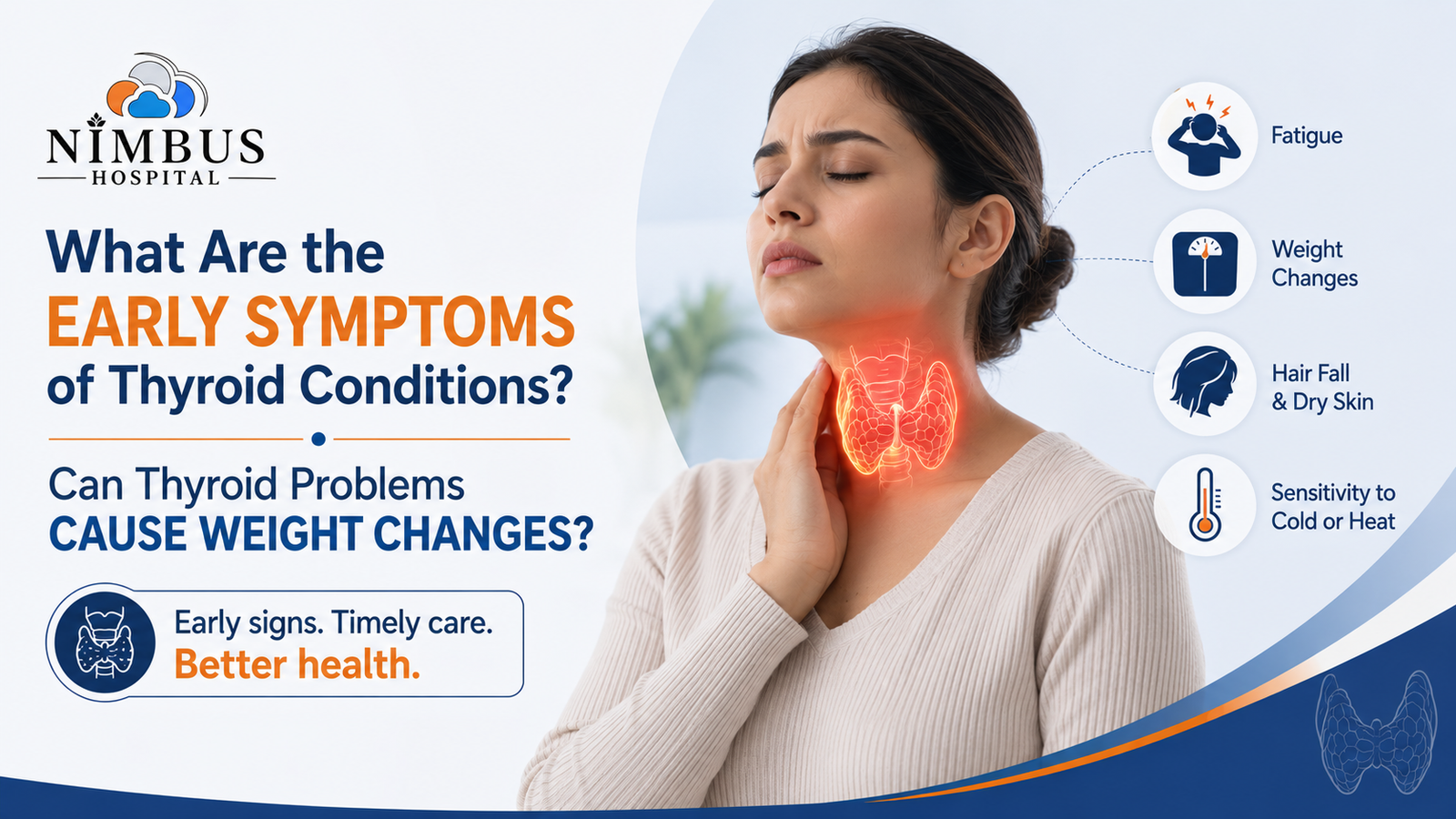
Thyroid problems can affect the body’s metabolism, energy levels, mood, heart rate and weight. Some people notice unexplained weight gain, while others may lose weight without trying. Tiredness, changes in appetite, feeling unusually cold or hot, hair changes, constipation, anxiety or a faster heartbeat can also occur depending on the thyroid condition. If you are experiencing persistent symptoms, proper medical evaluation is important. For people looking for Thyroid Treatment in Solan, Nimbus Hospital provides thyroid evaluation and management through its MD Medicine services, supported by clinical assessment, laboratory investigations and personalised treatment planning.
What Does the Thyroid Gland Do?
The thyroid is a small, butterfly-shaped gland located in the front of the neck. It produces hormones that help regulate several important functions, including metabolism, energy use and body temperature.
When the thyroid produces too little hormone, the condition is generally called hypothyroidism. When it produces too much, it is called hyperthyroidism.
Both conditions can produce noticeable changes in the body, but their symptoms can be quite different. This is why it is important not to assume that every change in weight or energy is caused by the thyroid.
What Are the Early Symptoms of Thyroid Problems?
Thyroid conditions can develop gradually. Some symptoms may initially seem unrelated to the thyroid, particularly when they are mild.
1. Unexplained Weight Gain
Weight gain can occur with an underactive thyroid because reduced thyroid hormone levels can slow the body’s metabolism.
However, thyroid problems are not the only reason for weight gain. Changes in diet, physical activity, sleep, stress, certain medicines and other health conditions can also contribute.
If weight gain is unexplained and occurs with tiredness, constipation, dry skin or increased sensitivity to cold, thyroid evaluation may be appropriate.
2. Unexplained Weight Loss
An overactive thyroid can increase metabolic activity and may result in weight loss despite having a normal or increased appetite.
Unexpected weight loss should always be taken seriously because it can have many possible causes. If it occurs with a fast heartbeat, sweating, anxiety, shaking or heat intolerance, discuss the symptoms with a doctor.
3. Constant Tiredness
Persistent fatigue is one of the symptoms commonly reported with an underactive thyroid.
You may feel unusually tired, lack energy or find normal activities more difficult than before. Because fatigue is common in many conditions, a doctor may recommend thyroid testing along with other investigations depending on your symptoms.
4. Feeling Too Cold or Too Hot
People with hypothyroidism may feel unusually sensitive to cold, while those with hyperthyroidism may feel excessively warm or sweat more than usual.
If your tolerance to temperature changes noticeably without an obvious reason, it is worth discussing with a healthcare professional.
5. Changes in Heart Rate
Thyroid hormones can affect the cardiovascular system.
An overactive thyroid may cause a faster heartbeat or palpitations, while an underactive thyroid can sometimes be associated with a slower heart rate.
If you experience persistent palpitations, chest discomfort, severe breathlessness or fainting, seek medical attention promptly.
6. Hair and Skin Changes
Thyroid disorders can sometimes cause changes in the skin and hair.
An underactive thyroid may be associated with dry skin and hair changes, while excessive thyroid hormone can also affect hair health.
These symptoms alone cannot confirm a thyroid disorder, but they can be useful information for your doctor.
7. Constipation or Changes in Digestion
Slower body processes associated with hypothyroidism can contribute to constipation.
On the other hand, increased bowel movements can occur in some people with hyperthyroidism.
Persistent changes in bowel habits should be evaluated because digestive symptoms can have many different causes.
8. Mood and Concentration Changes
Thyroid hormone imbalance can affect mood and mental energy.
Some people with an underactive thyroid may experience low mood, reduced concentration or feeling mentally slow. Hyperthyroidism may be associated with anxiety, irritability or restlessness.
If these changes are persistent, medical evaluation can help determine whether the thyroid or another condition is responsible.
Can Thyroid Problems Really Cause Weight Changes?
Yes, thyroid problems can contribute to changes in body weight.
An underactive thyroid can reduce metabolic activity and may contribute to weight gain. An overactive thyroid can increase metabolic activity and may result in weight loss.
But the amount of weight change varies from person to person. Weight should therefore not be used on its own to diagnose a thyroid condition.
A person can have thyroid disease without major weight changes, and weight changes can occur even when the thyroid is functioning normally.
This is why proper blood testing and clinical evaluation are more reliable than trying to diagnose a thyroid problem based only on your weight.
How Are Thyroid Problems Diagnosed?
The diagnosis usually begins with a discussion about symptoms, medical history, medicines and other health conditions. The doctor may then recommend blood tests to assess thyroid function.
Depending on the findings, additional investigations may be required.
Nimbus Hospital’s MD Medicine department provides evaluation and management of thyroid disorders along with other metabolic and chronic conditions. Its care approach includes clinical evaluation, targeted investigations, personalised treatment and follow-up monitoring.
The hospital also has a computerized laboratory and provides blood testing facilities, which can support the investigation and monitoring of thyroid conditions.
Thyroid Care at Nimbus Hospital
Thyroid disorders often require ongoing monitoring rather than a single consultation. Treatment depends on the type of thyroid condition, test results, symptoms and the patient’s overall health.
Nimbus Hospital’s MD Medicine service specifically includes thyroid disorders among the conditions managed by its medical team. The department focuses on understanding the patient’s medical history, conducting appropriate investigations and developing a treatment plan according to individual requirements.
For patients undergoing long-term thyroid treatment, follow-up is important because medication requirements can change over time. Thyroid hormone levels and symptoms may need to be reviewed periodically by the treating doctor.
Why Choose Nimbus Hospital for Thyroid Care?
Experienced MD Medicine Care
Nimbus Hospital’s MD Medicine department provides care for adults and elderly patients and manages thyroid disorders alongside diabetes, hypertension, obesity and other metabolic conditions.
Diagnostic Support
The hospital has a computerized pathology laboratory and provides blood investigations that can help doctors evaluate and monitor health conditions.
Personalised Treatment
Thyroid treatment depends on the individual’s condition and test results. Nimbus Hospital follows a personalised approach rather than applying the same treatment plan to every patient.
Follow-Up Monitoring
Thyroid conditions can require regular monitoring. Follow-up allows the doctor to review symptoms, test results and treatment response and make changes when clinically required.
Comprehensive Medical Care
Thyroid disorders can occur alongside other conditions such as diabetes, obesity and hypertension. Nimbus Hospital’s internal medicine approach allows these health concerns to be evaluated together when necessary.
Patient-Focused Approach
Nimbus Hospital highlights clear diagnosis, personalised treatment and supportive follow-up as important parts of its patient-care approach.
What Can You Do to Support Thyroid Health?
If you have symptoms that may indicate a thyroid problem, the most useful step is to get properly evaluated rather than taking thyroid supplements or medicines without medical advice.
Some general habits can support overall health:
- Follow a balanced diet.
- Stay physically active.
- Maintain a healthy weight.
- Get adequate sleep.
- Take prescribed medicines regularly.
- Attend recommended follow-up appointments.
- Complete thyroid tests when advised.
- Avoid changing medication doses without speaking to your doctor.
There is no single diet or home remedy that can replace appropriate medical treatment for a diagnosed thyroid disorder.
When Should You See a Doctor?
Consider a medical consultation if you experience unexplained and persistent weight gain or weight loss along with symptoms such as:
- Constant fatigue
- Hair loss or noticeable hair changes
- Feeling unusually cold or hot
- Constipation or frequent bowel movements
- Palpitations
- Anxiety or mood changes
- Difficulty concentrating
- Changes in your menstrual cycle
- Swelling around the neck
A doctor can determine whether thyroid testing is appropriate and whether another health condition may be causing the symptoms.
Severe chest pain, serious breathing difficulty, fainting or a very fast or irregular heartbeat requires prompt medical attention rather than waiting for a routine thyroid appointment.
Thyroid Treatment in Solan at Nimbus Hospital
For people searching for Thyroid Treatment in Solan, Nimbus Hospital offers thyroid evaluation and management through its MD Medicine department, with diagnostic laboratory support and personalised treatment planning.
The hospital’s approach focuses on understanding the patient’s symptoms and medical history, performing appropriate investigations and monitoring the response to treatment. This is particularly important for thyroid conditions because symptoms can overlap with many other medical problems.
Rather than treating weight gain or fatigue alone, proper medical evaluation can help identify whether thyroid dysfunction is actually contributing to the problem.
Final Thoughts
Thyroid conditions can affect much more than body weight. Changes in energy, mood, digestion, heart rate, temperature tolerance, skin and hair can all occur depending on whether the thyroid is underactive or overactive.
Yes, thyroid problems can cause weight changes, but weight gain or weight loss alone does not confirm a thyroid disorder. Blood tests and clinical assessment are important for reaching the right diagnosis.
If you have persistent symptoms or unexplained changes in weight, energy or heart rate, consider speaking with a qualified doctor. Early evaluation can help identify thyroid problems and other possible causes, allowing appropriate treatment and monitoring.
For patients seeking Thyroid Treatment in Solan, Nimbus Hospital provides MD Medicine consultation, thyroid evaluation, diagnostic support, personalised treatment and follow-up care.
FAQ’s
1. Can thyroid problems cause weight gain?
Yes, especially with an underactive thyroid.
2. Can thyroid problems cause weight loss?
Yes, an overactive thyroid may cause unexplained weight loss.
3. What test checks thyroid function?
Blood tests are commonly used to assess thyroid function.
4. Can thyroid problems cause tiredness?
Yes, particularly in hypothyroidism.
5. Can thyroid conditions be treated?
Yes, most thyroid conditions can be managed with appropriate treatment.