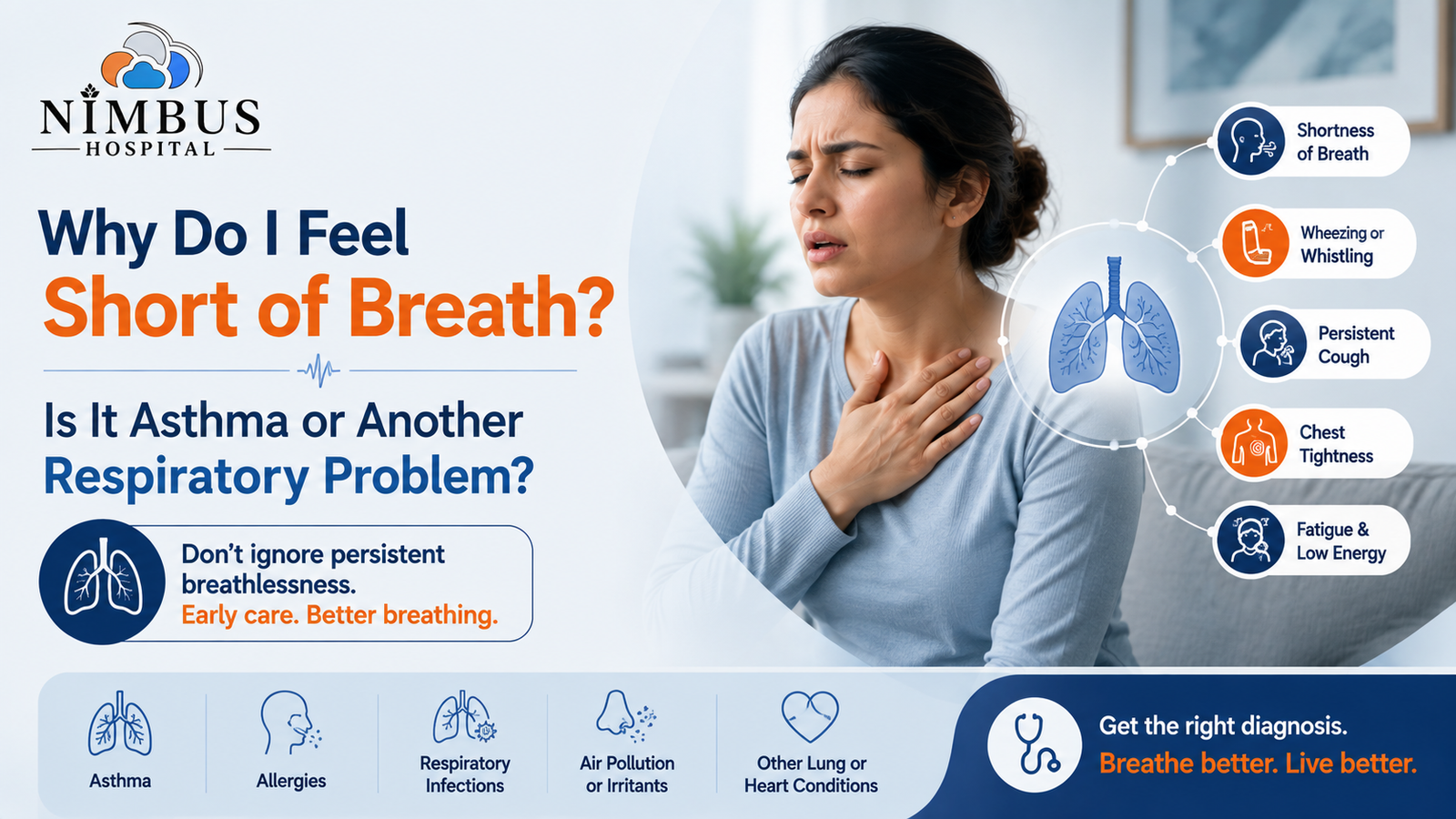
Shortness of breath can be uncomfortable and sometimes frightening. While asthma is a common reason for breathing difficulty, it is not the only possible cause. Allergies, respiratory infections, COPD, heart-related conditions, and other health problems can also cause breathlessness. If breathing difficulty keeps coming back, getting the right diagnosis is important. At Nimbus Hospital, patients can receive Asthma Treatment in Solan along with evaluation for other respiratory and heart-lung conditions under one roof.
What Does Shortness of Breath Feel Like?
Breathlessness may feel different from person to person. Some people feel that they cannot take a deep breath, while others may experience chest tightness, wheezing or difficulty breathing during physical activity.
Common symptoms that may occur with breathing difficulty include:
- Shortness of breath while walking or exercising
- Wheezing or a whistling sound while breathing
- Chest tightness
- Persistent or recurring cough
- Breathlessness at night
- Reduced stamina or unusual tiredness
- Breathlessness even during mild activity
Nimbus Hospital’s Cardiac & Respiratory Physician evaluates symptoms such as shortness of breath, wheezing, chronic cough and chest discomfort to identify whether the problem may be related to the lungs, heart or another condition.
Is Shortness of Breath Always Asthma?
No. Asthma is one possible cause, but breathlessness should not automatically be assumed to be asthma.
Asthma commonly involves symptoms such as wheezing, chest tightness, cough and breathlessness. Symptoms may become worse after exposure to triggers such as dust, smoke, pollution, pollen, cold air, weather changes or respiratory infections.
Other possible causes include:
1. COPD
COPD can cause long-term breathing difficulty, especially while walking or performing physical activity. Persistent cough, wheezing, chest tightness and frequent respiratory infections may also occur. Smoking, passive smoking, air pollution, dust and biomass smoke exposure are recognised risk factors.
2. Respiratory Infections
Chest or respiratory infections can cause coughing, fever and breathing difficulty. If breathlessness becomes severe or is associated with low oxygen signs, urgent medical assessment may be required.
3. Heart-Related Problems
Breathlessness can sometimes be associated with heart conditions, particularly when it occurs with chest discomfort, palpitations, dizziness or swelling in the feet. This is why persistent breathlessness may require both respiratory and cardiac evaluation.
4. Allergies
Allergies can trigger respiratory symptoms in some people. Dust, pollen and other environmental triggers may worsen breathing problems, particularly in people who are sensitive to them.
How Can You Know If It Is Asthma?
The symptoms alone cannot always confirm asthma. A doctor may review your symptoms, possible triggers, medical history and breathing pattern before deciding whether further testing is needed.
At Nimbus Hospital, the asthma care process includes symptom and trigger assessment, clinical review and lung function testing when required. Treatment can then be planned according to the patient’s symptoms and severity.
What Tests May Be Recommended?
The tests depend on your symptoms and clinical assessment. Nimbus Hospital provides respiratory and heart-lung diagnostic support, including:
- PFT (Pulmonary Function Test) for lung capacity and airway assessment
- ECG for heart rhythm assessment
- Echo when heart function needs evaluation
- X-ray or imaging when recommended
- Blood tests or other investigations when clinically required
The hospital also provides a computerized laboratory, ECG, X-ray and advanced pulmonary testing support. Selected tests may have same-day reports, and home sample collection is available.
How Is Asthma Treated?
Asthma treatment depends on the person’s symptoms, severity and response to treatment. The aim is not only to provide relief during symptoms but also to maintain long-term control.
Nimbus Hospital’s asthma care may include:
Inhaler Therapy
Doctors may recommend controller or reliever inhalers depending on the patient’s condition. Correct inhaler technique is important for effective treatment.
Nebulization When Required
Nebulization may be used during acute episodes or severe symptoms under medical supervision.
Trigger Management
Identifying and reducing exposure to triggers such as dust, smoke, pollution, pollen and cold air can help reduce asthma flare-ups.
Regular Monitoring
Follow-up helps doctors assess symptom control, review inhaler use and update the treatment plan when necessary.
Why Choose Nimbus Hospital for Respiratory Care?
Nimbus Hospital follows a structured approach that begins with consultation and clinical evaluation, followed by targeted investigations, personalised treatment and regular follow-up. This helps avoid treating breathlessness based only on symptoms without understanding its possible cause.
The hospital provides:
- Cardiac and respiratory physician support
- PFT and other diagnostic facilities
- Asthma and COPD management
- Inhaler and trigger-management guidance
- Personalised treatment plans
- Follow-up and long-term monitoring
- 24×7 emergency support
- ICU/HDU backup when required
Nimbus Hospital also offers a free PFT test every Monday, according to its current website information.
When Is Breathlessness an Emergency?
Not every episode of breathlessness is an emergency, but severe symptoms should never be ignored.
Seek immediate medical attention if you experience:
- Severe breathlessness at rest
- Difficulty speaking because of breathing difficulty
- Bluish lips or signs of low oxygen
- Severe chest pain or pressure
- Fainting or loss of consciousness
- Sudden severe breathing difficulty
- Rapid worsening of symptoms
Nimbus Hospital provides 24×7 emergency care with rapid triage, stabilisation, diagnostic support and ICU/HDU backup when required.
When Should You See a Doctor?
You should consider a medical evaluation if breathlessness keeps returning, affects your daily activities, wakes you at night, occurs with wheezing or cough, or is becoming more frequent.
It is particularly important not to repeatedly use someone else’s inhaler or self-medicate without knowing the underlying cause. Proper assessment can help determine whether symptoms are related to asthma, COPD, infection, allergy, heart problems or another condition.
For people looking for Asthma Treatment in Solan, Nimbus Hospital provides respiratory evaluation, PFT support, personalised treatment and long-term follow-up under one roof.
Final Thoughts
Shortness of breath is a symptom, not a diagnosis. Asthma is a common cause, but COPD, infections, allergies and heart-related conditions can produce similar breathing problems. The right approach is to identify the underlying cause through proper clinical evaluation and appropriate testing.
If your breathing difficulty is recurring or getting worse, do not ignore it. Early evaluation can help with better symptom control and reduce the risk of complications.
FAQ’s
1. Can asthma cause shortness of breath?
Yes. Breathlessness is a common asthma symptom, often with wheezing or chest tightness.
2. Can COPD cause breathlessness?
Yes. COPD commonly causes progressive breathlessness, cough, wheezing and reduced stamina.
3. What test checks lung function?
A PFT helps assess lung capacity and airway function when recommended by a doctor.
4. When is breathlessness an emergency?
Severe breathlessness, blue lips, difficulty speaking or chest pain require immediate medical care.
5. Can heart problems cause breathing difficulty?
Yes. Some heart conditions can cause breathlessness, especially with chest discomfort or swelling.