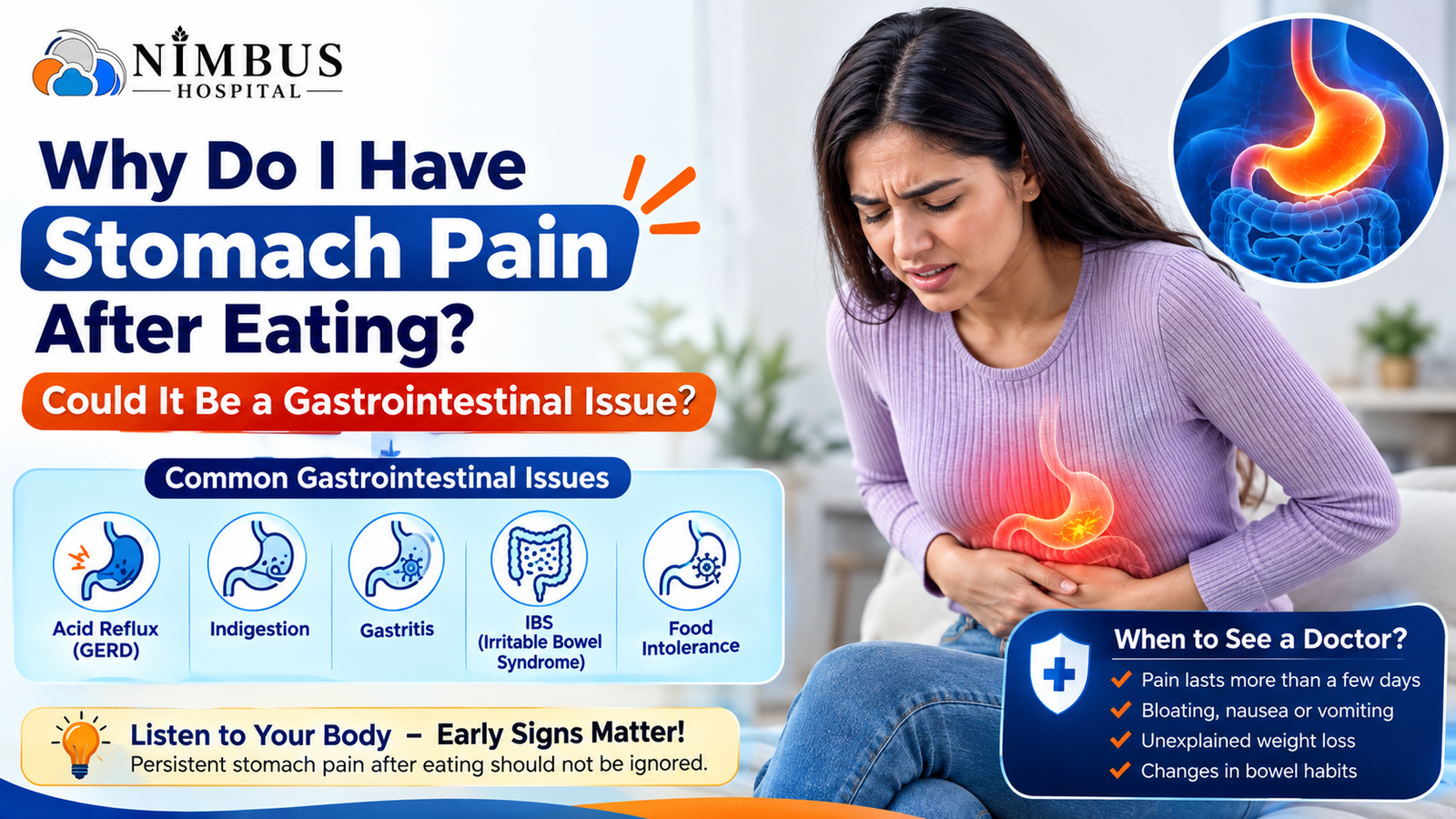
Stomach pain after eating is common, but when it happens frequently, becomes severe, or comes with other digestive symptoms, it should not be ignored. Acidity, gas, bloating, GERD, IBS, food intolerance, infections and other gastrointestinal problems can cause abdominal discomfort after meals. At Nimbus Hospital, patients looking for Best Gastrointestinal Treatment in Solan can receive proper evaluation, required diagnostic tests and a personalised treatment plan.
Why Does My Stomach Hurt After Eating?
The digestive system responds to every meal, but certain foods, eating habits and underlying health conditions can lead to pain or discomfort.
Some common reasons include:
1. Acidity or GERD
Acid reflux can cause burning or discomfort in the upper abdomen or chest, especially after heavy meals, late-night eating or trigger foods. Sour burps and heartburn may also occur.
2. Gas and Bloating
Eating too quickly, overeating, certain foods or digestive problems can lead to gas and bloating. You may feel heaviness, fullness or abdominal discomfort after meals.
3. Irritable Bowel Syndrome
IBS can cause recurring abdominal pain, bloating, constipation, diarrhea or changes in bowel habits. Symptoms may vary from person to person and can sometimes be influenced by particular foods or stress.
4. Food Intolerance
Some people develop digestive symptoms after consuming particular foods. Identifying the food pattern and discussing it with a doctor can help determine whether intolerance may be contributing to the problem.
5. Gastrointestinal Infection
Contaminated food or water can cause stomach infections. Abdominal pain may occur along with vomiting, loose motions, fever or weakness.
What Symptoms Should You Watch For?
Stomach pain after eating becomes more important to evaluate when it keeps returning or occurs along with other symptoms.
You may notice:
- Acidity or heartburn
- Sour burps
- Gas and bloating
- Abdominal cramps
- Constipation or diarrhea
- Nausea or vomiting
- Loss of appetite
- Feeling unusually full after meals
Nimbus Hospital’s gastrointestinal care information highlights abdominal pain, acidity, bloating, bowel changes, nausea and vomiting among common digestive symptoms that may require evaluation when they occur frequently.
Does the Food You Eat Make a Difference?
Yes. Certain eating habits can contribute to digestive discomfort.
Spicy or oily foods, large portions, irregular meals and late-night eating may worsen acidity or digestive symptoms in some people. Excess caffeine, smoking and alcohol can also contribute to digestive problems.
Instead of completely eliminating multiple foods on your own, it is better to identify patterns. Keep track of what you eat, when the pain starts and whether symptoms such as bloating, acidity or loose motions occur afterward.
When Should You See a Doctor?
Occasional mild stomach discomfort may settle on its own, but recurring pain deserves attention.
Consider consulting a doctor if:
- Pain occurs frequently after meals
- Symptoms are affecting your daily routine
- You have recurring acidity or bloating
- Constipation or diarrhea continues
- You frequently feel nauseous
- Your appetite has reduced
- Symptoms are becoming more frequent or severe
An MD Medicine specialist can review your symptoms, medical history, lifestyle and previous reports before deciding whether investigations are necessary. Nimbus Hospital follows a structured approach of consultation, targeted investigations, diagnosis, treatment and follow-up.
What Tests May Be Needed?
Not every patient with stomach pain requires extensive testing. The appropriate investigation depends on symptoms and the doctor’s clinical assessment.
Depending on the situation, tests may include:
- Blood tests
- Stool tests
- Ultrasound of the abdomen
- Liver and kidney-related investigations
- Endoscopy when required
- H. pylori testing in appropriate cases
Nimbus Hospital’s gastrointestinal care information lists blood and stool tests, abdominal ultrasound, endoscopy and H. pylori testing among investigations that may be recommended according to the symptoms and suspected cause.
The hospital also has diagnostic facilities including a pathology lab and imaging services, supporting coordinated diagnosis under one roof.
How Is Stomach Pain Treated?
Treatment depends entirely on the underlying cause. There is no single medicine that is appropriate for every type of stomach pain.
Treatment may involve:
Diet and Meal Changes
Eating smaller portions, maintaining regular meal timings and avoiding identified trigger foods may help reduce digestive discomfort.
Medicines When Required
Doctors may prescribe medicines for acidity, GERD, infection or other gastrointestinal conditions when clinically appropriate.
Hydration
Adequate fluids are important for general digestive health. If diarrhea or vomiting is present, maintaining fluid and electrolyte balance becomes particularly important.
Lifestyle Management
Regular physical activity, adequate sleep and stress management can support better digestive health. For conditions such as IBS, lifestyle and dietary changes can form an important part of long-term symptom management.
Why Choose Nimbus Hospital for Gastrointestinal Care?
Digestive problems can have several possible causes, so treating only the immediate pain may not always address the underlying issue. Nimbus Hospital focuses on identifying the likely cause through clinical evaluation and appropriate investigations before developing a personalised treatment approach.
Patients can benefit from:
- MD Medicine specialist consultation
- Gastrointestinal and liver-related care
- Pathology laboratory support
- Imaging facilities
- Personalised diet and lifestyle guidance
- Medication when clinically required
- Follow-up and monitoring
- Emergency support when urgent symptoms occur
The hospital’s care model includes reviewing symptoms and medical history, ordering investigations only when needed, creating a treatment plan and monitoring the patient’s response over time.
Which Stomach Pain Symptoms Need Urgent Attention?
Some digestive symptoms should not be managed at home without medical evaluation.
Seek urgent medical attention if stomach pain is:
- Sudden and severe
- Getting rapidly worse
- Associated with high fever
- Accompanied by persistent vomiting
- Associated with vomiting blood
- Associated with black or tar-like stools
- Accompanied by severe weakness or dizziness
- Associated with yellowing of the eyes or skin
Severe abdominal pain, gastrointestinal bleeding, persistent vomiting, dehydration and jaundice are listed by Nimbus Hospital as warning signs requiring prompt evaluation.
What Can I Do to Reduce Stomach Discomfort?
A few simple habits may support better digestion:
- Eat meals at regular times
- Avoid overeating
- Eat slowly and chew properly
- Drink enough water
- Limit foods that repeatedly trigger symptoms
- Avoid unnecessary painkiller use
- Maintain good food and water hygiene
- Include fibre gradually when appropriate
- Stay physically active
However, lifestyle changes should not replace medical evaluation when pain is persistent, recurrent or severe.
Final Thoughts
Stomach pain after eating can have a simple explanation such as overeating or acidity, but recurring pain may indicate GERD, IBS, food intolerance, infection or another gastrointestinal condition. The important step is to understand why the pain is occurring instead of repeatedly treating the symptom yourself.
If you are experiencing persistent digestive discomfort and looking for Best Gastrointestinal Treatment in Solan, proper consultation and timely diagnosis can help you receive treatment based on the actual cause. Nimbus Hospital provides gastrointestinal evaluation, diagnostic support, personalised treatment and follow-up care under one roof.
FAQ’s
1. Why does my stomach hurt after eating?
Acidity, gas, bloating, IBS, food intolerance and infections can cause pain after meals.
2. Can acidity cause stomach pain?
Yes. Acidity and GERD can cause burning, discomfort and other digestive symptoms.
3. When should stomach pain be checked?
Recurring, severe or worsening pain should be evaluated by a doctor.
4. Can IBS cause abdominal pain?
Yes. IBS commonly causes recurring abdominal pain along with bloating or bowel changes.
5. What tests may be used for stomach problems?
Depending on symptoms, doctors may recommend blood tests, stool tests, ultrasound or endoscopy.