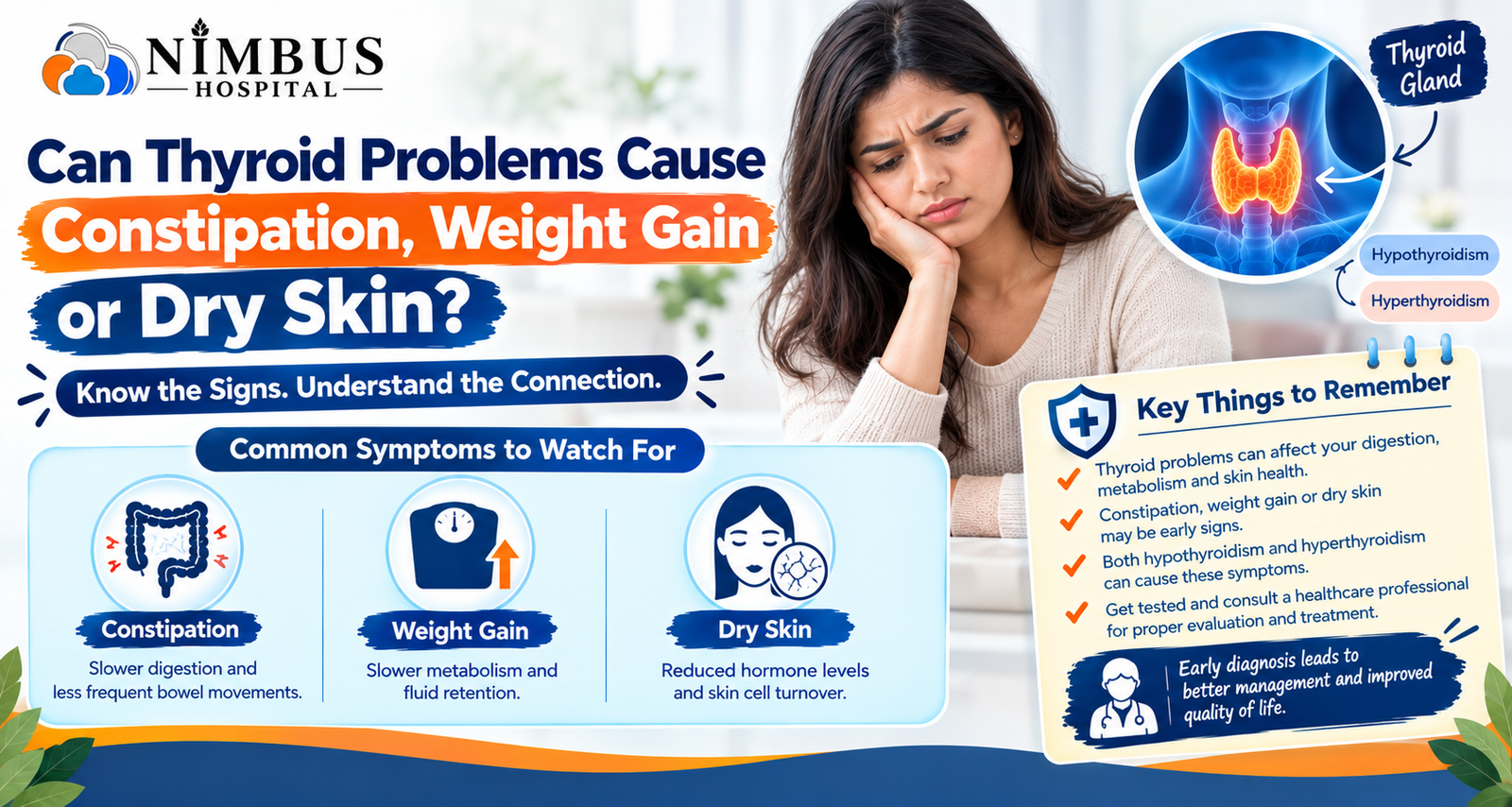
Constipation, unexplained weight gain and dry skin can sometimes be more than everyday problems. These symptoms are commonly associated with hypothyroidism, a condition in which the thyroid gland does not produce enough thyroid hormones. Since thyroid hormones influence metabolism, digestion, body temperature and several other functions, low thyroid hormone levels can affect how the body works. However, these symptoms can also have many other causes, so they should not be used to diagnose a thyroid disorder on their own. If you are experiencing several of these symptoms together, proper medical evaluation and Thyroid Treatment in Solan can help identify the underlying cause.
How Does Hypothyroidism Cause Constipation?
Thyroid hormones help regulate the body’s metabolism, including the movement of food through the digestive system.
When thyroid hormone levels are low, digestion and bowel movement can become slower. This may result in constipation, fewer bowel movements or difficulty passing stools.
If constipation continues despite adequate water, fibre and physical activity, it is worth discussing with a doctor—particularly if you also have tiredness, weight gain, dry skin or increased sensitivity to cold.
Why Can Thyroid Problems Cause Weight Gain?
An underactive thyroid can slow down metabolism. This means the body may use energy more slowly than it normally would.
Some people with hypothyroidism experience weight gain or find it difficult to lose weight despite making changes to their diet and activity levels. However, thyroid problems are not the only possible reason for weight gain.
Diet, physical activity, sleep, medications, hormonal changes and other health conditions can also influence body weight.
This is why thyroid testing should be based on symptoms and medical assessment rather than assuming that every unexplained weight change is caused by the thyroid.
Can Hypothyroidism Cause Dry Skin?
Yes. Dry or rough skin can occur with an underactive thyroid.
Reduced thyroid hormone activity can affect normal skin function and may contribute to dryness. Some people may also notice dry, coarse skin along with other symptoms such as tiredness, constipation, feeling unusually cold or changes in hair.
Persistent skin dryness, however, can also result from weather, dehydration, skincare products and several skin conditions.
What Other Symptoms Can Thyroid Problems Cause?
Hypothyroidism can produce a range of symptoms, and they may develop gradually. Common symptoms can include:
- Persistent tiredness
- Weight gain
- Constipation
- Dry or rough skin
- Feeling unusually cold
- Hair thinning or hair changes
- Muscle weakness or aches
- Difficulty concentrating
- Low mood
- Changes in menstrual periods
Not everyone experiences all of these symptoms. Some people may have only a few noticeable changes.
How Are Thyroid Problems Diagnosed?
Symptoms alone cannot confirm hypothyroidism. Blood tests are generally needed to assess thyroid function.
A doctor may recommend tests such as TSH and free T4, depending on the patient’s symptoms and medical history.
If your symptoms suggest a thyroid disorder, your doctor may also review your weight, blood pressure, medications, medical history and other relevant health factors.
Getting the correct diagnosis is important because constipation, fatigue and weight changes can occur in many different conditions.
How Is Hypothyroidism Treated?
Treatment depends on the underlying thyroid condition.
For hypothyroidism, doctors commonly use thyroid hormone replacement medicine to restore hormone levels. The appropriate dose varies from person to person and may need adjustment based on follow-up blood tests and clinical response.
Patients should take thyroid medicine according to their doctor’s instructions and should not change the dose or stop treatment without medical advice.
Regular follow-up helps ensure that thyroid hormone levels remain within the desired range.
Can Lifestyle Changes Help?
Healthy lifestyle habits can support overall wellbeing while thyroid problems are being managed.
A balanced diet, regular physical activity, adequate sleep and appropriate hydration can help support digestion, energy and healthy weight management.
However, lifestyle changes cannot replace prescribed thyroid treatment when hormone replacement is medically necessary.
It is also better to avoid taking thyroid supplements or herbal products without discussing them with a qualified healthcare professional.
Why Choose Nimbus Hospital for Thyroid Care?
Nimbus Hospital provides medical consultation and diagnostic support for thyroid and other endocrine-related conditions. Its MD Medicine services include the management of thyroid disorders, diabetes, hypertension and obesity, allowing patients to receive evaluation for conditions that may occur together.
The hospital also provides diagnostic facilities, including a computerized laboratory, which can support blood tests recommended by the treating doctor.
Its approach focuses on understanding the patient’s symptoms, conducting appropriate investigations, creating a personalised treatment plan and providing follow-up care.
For patients looking for Thyroid Treatment in Solan, proper evaluation is particularly important because symptoms such as weight gain, constipation and tiredness can have several possible causes.
When Should You See a Doctor?
Consider consulting a doctor if constipation, weight gain or dry skin persists without an obvious explanation, especially when several symptoms occur together.
Medical evaluation is particularly useful if you also experience persistent fatigue, cold intolerance, hair changes or difficulty managing your weight.
Early diagnosis can help identify whether thyroid dysfunction is responsible and whether treatment is required.
Final Thoughts
An underactive thyroid can affect several parts of the body and may contribute to symptoms such as constipation, weight gain and dry skin. Because these symptoms are also common in many other conditions, testing is important before starting treatment.
If you have noticed several unexplained changes in your health, speak with a qualified doctor and consider appropriate thyroid testing. With the right diagnosis, prescribed treatment and regular monitoring, thyroid disorders can generally be managed effectively.
FAQs
1. Can hypothyroidism cause constipation?
Yes, low thyroid hormone levels can slow digestion and contribute to constipation.
2. Can thyroid problems cause weight gain?
Yes, hypothyroidism can contribute to weight gain and difficulty losing weight.
3. Does hypothyroidism cause dry skin?
Yes, dry or rough skin is a common symptom of an underactive thyroid.
4. Which test checks thyroid function?
TSH and free T4 blood tests are commonly used to assess thyroid function.
5. Can thyroid problems be treated?
Yes, appropriate treatment can help manage thyroid hormone levels and symptoms.