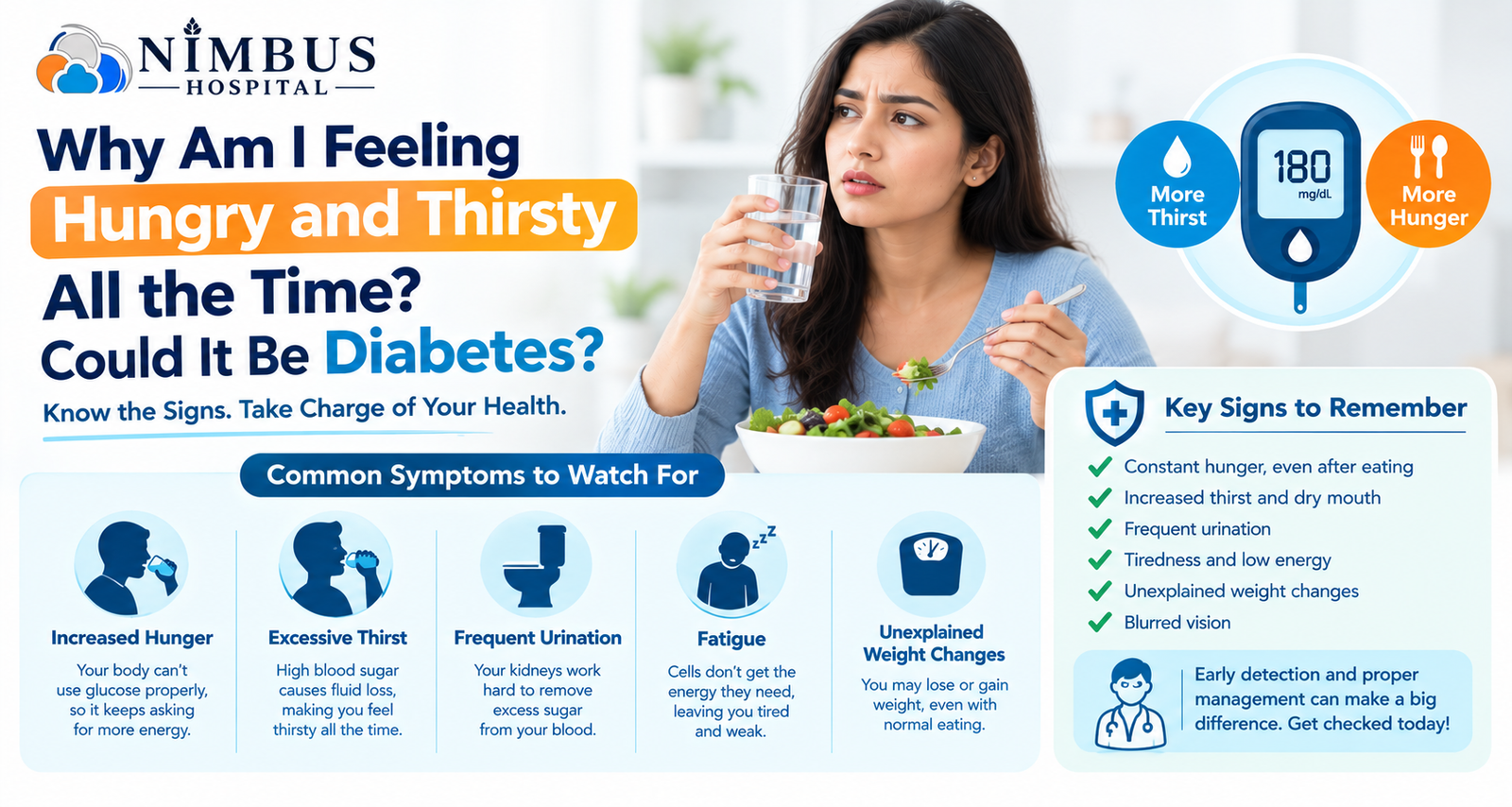
Feeling hungry or thirsty occasionally is completely normal. But if you are constantly drinking water, feeling hungry soon after meals, or needing to urinate more often, your body may be trying to tell you something. Persistent hunger and thirst can sometimes be linked to high blood sugar and may be an early sign of diabetes.
Diabetes affects how your body uses glucose for energy. When blood sugar remains high, glucose may not enter the cells properly. This can leave you feeling tired and hungry even after eating. If you are experiencing these symptoms regularly, timely Diabetes Treatment in Solan can help identify the underlying cause and prevent complications.
Why Does Diabetes Make You Feel Hungry?
In diabetes, there may be enough glucose in the bloodstream, but the body may not be able to use it effectively because of insufficient insulin or insulin resistance.
As a result, your cells may not receive enough usable energy. Your brain can interpret this energy shortage as hunger, even when you have recently eaten.
This may lead to:
- Feeling hungry shortly after meals
- Increased appetite throughout the day
- Cravings for food or carbohydrates
- Unexplained weight loss in some people
- Tiredness despite eating regularly
Persistent hunger alone does not mean you have diabetes, but when it occurs with other symptoms, it is worth getting your blood sugar checked.
Why Does Diabetes Cause Excessive Thirst?
When blood glucose becomes too high, the kidneys work harder to remove the excess glucose through urine. This causes the body to lose more water.
As you lose fluids, your brain signals you to drink more. This can result in excessive thirst, often called polydipsia.
You may notice:
- Drinking water much more frequently
- Feeling thirsty soon after drinking
- Dry mouth
- Increased urination, especially at night
- Feeling dehydrated
If excessive thirst continues for several days or weeks, it should not be ignored.
Other Symptoms That May Occur With Diabetes
Increased hunger and thirst may occur alongside other symptoms. These can include:
Frequent Urination
High blood sugar can cause increased urination as the kidneys try to remove excess glucose from the bloodstream.
Unexplained Weight Loss
When the body cannot use glucose properly, it may begin using stored fat and muscle for energy, potentially leading to unexpected weight loss.
Persistent Tiredness
Poor glucose utilisation can leave you feeling unusually tired or lacking energy.
Blurred Vision
High blood sugar can temporarily affect the fluid balance in the eye and cause changes in vision.
Slow-Healing Cuts
People with poorly controlled diabetes may experience slower wound healing and may be more vulnerable to infections.
Not everyone with diabetes experiences all of these symptoms. Some people may have high blood sugar for a long time without noticeable warning signs.
Is Constant Hunger and Thirst Always Caused by Diabetes?
No. There are several possible causes.
Increased thirst may occur because of:
- Hot weather or excessive sweating
- Dehydration
- High salt intake
- Certain medications
- Fever or illness
Increased hunger can be associated with:
- Skipping meals
- Poor sleep
- High physical activity
- Stress
- Certain medications
- Thyroid or other metabolic conditions
Because the symptoms have many possible causes, testing is the best way to determine whether high blood sugar is involved.
When Should You Get Your Blood Sugar Checked?
Consider speaking with a doctor if you regularly experience excessive hunger or thirst, especially if you also have frequent urination, unexplained weight changes, fatigue, or blurred vision.
A doctor may recommend blood glucose testing based on your symptoms and risk factors. Common tests include:
- Fasting blood glucose
- Post-meal blood glucose
- HbA1c
- Random blood glucose when appropriate
HbA1c is particularly useful because it provides an estimate of average blood sugar levels over the previous few months.
How Is Diabetes Treated?
Diabetes treatment depends on the type of diabetes, blood sugar levels, overall health, and individual risk factors.
Treatment may include:
Healthy Eating
A balanced diet with appropriate portions of carbohydrates, proteins, vegetables, and healthy fats can help manage blood glucose.
Regular Physical Activity
Exercise can improve insulin sensitivity and support better blood sugar control. Your doctor can recommend an activity plan based on your health and fitness level.
Medicines
Depending on the type and severity of diabetes, medicines may be prescribed to help control blood glucose. Some people may also require insulin.
Regular Monitoring
Checking blood glucose as advised can help understand how food, activity, stress, and medication affect your sugar levels.
Follow-Up Care
Diabetes is generally a long-term condition, so regular follow-up is important. Treatment may need adjustment over time to keep blood sugar within the recommended range.
Why Should You Not Ignore Persistent Thirst and Hunger?
High blood sugar can remain unnoticed for a long time. If diabetes is left untreated or poorly controlled, it can gradually affect organs such as the eyes, kidneys, nerves, heart, and blood vessels.
The good news is that early diagnosis and consistent management can significantly reduce the risk of many diabetes-related complications.
Rather than assuming that constant hunger or thirst is simply due to your diet or routine, getting appropriate medical advice can provide clarity.
Diabetes Care at Nimbus Hospital
Nimbus Hospital provides medical care for diabetes and other metabolic conditions through clinical assessment, diagnostic support, personalised treatment, diet guidance, medication management, and follow-up care. Its MD Medicine services also address conditions such as thyroid disorders, obesity, hypertension, and metabolic syndrome, which can sometimes overlap with diabetes-related concerns.
For people looking for Diabetes Treatment in Solan, discussing persistent symptoms with a qualified doctor can help determine whether they are related to diabetes or another underlying condition.
Final Thoughts
Constant hunger and thirst should not automatically be taken as proof of diabetes, but they are symptoms worth paying attention to—especially when they occur with frequent urination, fatigue, unexplained weight loss, or blurred vision.
A simple blood sugar test can help determine whether diabetes may be involved. If your symptoms are persistent, speak with a doctor and avoid self-diagnosing or starting medication without medical advice.
FAQs
1. Can excessive thirst be a sign of diabetes?
Yes, increased thirst can occur when blood sugar levels are consistently high.
2. Why does diabetes cause constant hunger?
Cells may not use glucose effectively, creating a feeling of ongoing hunger.
3. Can hunger and thirst occur without diabetes?
Yes. Dehydration, lifestyle factors, medications, and other conditions can cause them.
4. Which test checks for diabetes?
Fasting glucose and HbA1c are commonly used to assess blood sugar levels.
5. Should I see a doctor for constant thirst?
Yes, especially if thirst occurs with frequent urination, fatigue, or unexplained weight loss.