Breathing problems are easy to ignore when they develop slowly. A person may think that a persistent cough, mild breathlessness, or reduced stamina is simply due to age, pollution, smoking, or a lack of exercise. However, these can sometimes be early signs of COPD (Chronic Obstructive Pulmonary Disease) or another form of respiratory obstruction.
COPD is a long-term condition in which airflow through the lungs becomes restricted, making breathing more difficult. Early diagnosis and proper management can help control symptoms, reduce flare-ups, and support a better quality of life. If you regularly experience breathing difficulties, seeking COPD Treatment in Solan can help identify the cause and guide appropriate treatment.
What Is COPD and Respiratory Obstruction?
COPD refers to a group of chronic lung conditions that cause persistent airflow limitation. Respiratory obstruction means that air cannot move freely through the airways because they have become narrowed or blocked.
COPD generally develops gradually. This is why early symptoms may seem minor at first. Over time, however, breathing difficulty can become more noticeable, particularly during physical activity.
Common risk factors include:
- Smoking or long-term exposure to second-hand smoke
- Air pollution and dust
- Biomass fuel or chulha smoke
- Workplace exposure to chemical fumes
- Repeated respiratory or chest infections
Recognising the early symptoms can encourage timely medical evaluation.
Early Signs of COPD You Should Not Ignore
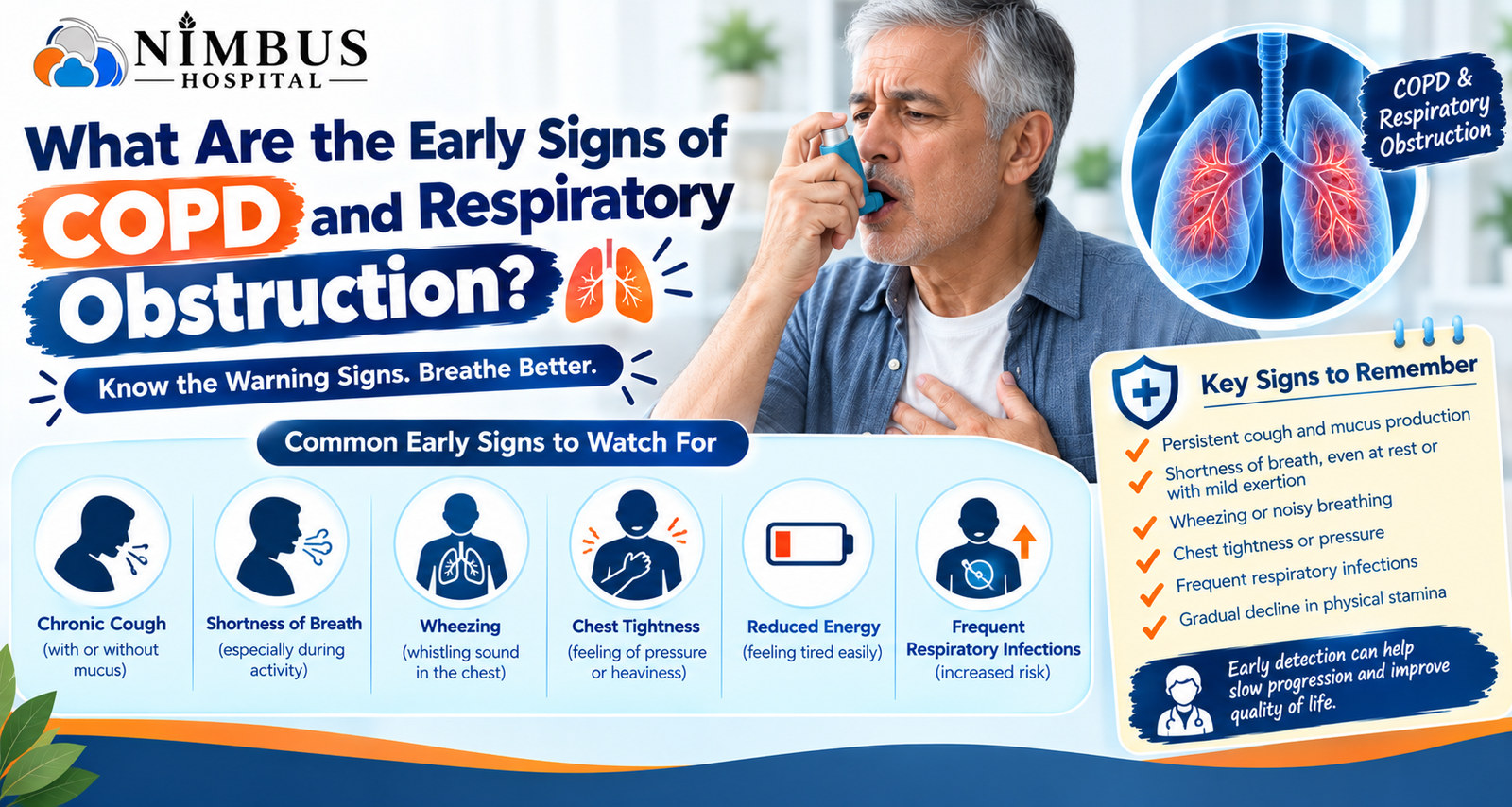
1. Persistent Cough
A cough that continues for several weeks or keeps coming back should not always be dismissed as a seasonal problem. COPD-related cough may be persistent and can sometimes produce mucus or phlegm.
If your cough is becoming more frequent, especially in the morning or after physical activity, discuss it with a doctor.
2. Shortness of Breath
One of the most common early symptoms is breathlessness. Initially, you may notice it only while climbing stairs, walking quickly, or doing physically demanding work.
As the condition progresses, breathlessness may occur with routine activities and eventually even at rest.
3. Wheezing
Wheezing is a high-pitched or whistling sound that may occur while breathing. It can happen when airflow is restricted through narrowed airways.
Repeated wheezing should be medically evaluated, particularly when it occurs together with cough or breathlessness.
4. Chest Tightness
Some people with airway obstruction experience a feeling of pressure or tightness in the chest. It may become more noticeable during exercise or when breathing becomes difficult.
Chest tightness can have several causes, so proper medical assessment is important rather than assuming it is COPD.
5. Frequent Respiratory Infections
Repeated episodes of bronchitis, chest infections, or other respiratory infections may indicate an underlying lung problem.
If infections keep returning or take longer than expected to improve, a doctor may recommend further evaluation of your lung function.
6. Reduced Stamina and Fatigue
Do you get tired after activities that were previously easy for you? Reduced stamina can occur when breathing becomes less efficient.
People may gradually reduce walking, climbing stairs, or exercising because these activities make them breathless. This can further reduce physical fitness and make everyday activities more difficult.
When Should You See a Doctor?
You should consider a medical evaluation if you have:
- A long-lasting or recurring cough
- Breathlessness during normal activities
- Repeated wheezing
- Frequent chest or respiratory infections
- Increasing mucus or phlegm
- Reduced ability to exercise or walk
- A history of smoking or significant dust exposure
You do not need to wait until symptoms become severe. Early evaluation can help identify respiratory problems and determine whether treatment is required.
How Is COPD Diagnosed?
Symptoms alone cannot confirm COPD. A doctor may first ask about your symptoms, smoking history, environmental exposure, previous infections, and medical history.
Depending on your symptoms, lung-function testing such as spirometry may be recommended. This test helps assess how much air you can breathe in and out and how effectively you can move air through your lungs.
Other investigations may be considered when clinically appropriate, such as chest imaging, oxygen assessment, or other diagnostic tests.
At Nimbus Hospital, the COPD care process includes clinical assessment, evaluation of risk factors, confirmation of diagnosis through spirometry or lung-function testing when required, and development of an individualised treatment plan.
How Is COPD Treated?
COPD cannot usually be completely cured, but appropriate treatment can help control symptoms and reduce exacerbations.
Treatment may include:
Inhalers and Bronchodilators
Inhaled medicines can help open the airways and make breathing easier. Depending on the condition, a doctor may recommend maintenance inhalers, reliever medicines, or both.
Correct inhaler technique is also important because improper use can reduce the amount of medicine reaching the lungs.
Nebulization and Oxygen Support
During certain acute exacerbations, nebulization may be used under medical supervision. Oxygen therapy may also be considered when oxygen levels are low and supplementation is medically required.
Pulmonary Rehabilitation
Pulmonary rehabilitation may include breathing exercises, physical activity, and physiotherapy guidance to improve stamina and support better breathing.
Lifestyle Changes
Stopping smoking is one of the most important steps for people with COPD. It is also helpful to reduce exposure to smoke, dust, pollution, and strong chemical fumes.
Regular physical activity, breathing exercises, appropriate vaccinations, and following prescribed treatment can also support long-term management.
What Happens During a COPD Flare-Up?
COPD symptoms can suddenly become worse, which is known as an exacerbation or flare-up.
Warning signs may include:
- Increased coughing
- More mucus than usual
- Worsening breathlessness
- Fever or symptoms of infection
Severe breathlessness at rest, inability to speak properly because of breathing difficulty, bluish lips, confusion, or unusual drowsiness require urgent medical attention.
Why Early Treatment Matters
COPD is a progressive condition, but early recognition and appropriate management can make a meaningful difference. Ignoring symptoms may allow breathing problems to interfere increasingly with work, exercise, sleep, and everyday activities.
If you have persistent cough, breathlessness, wheezing, or reduced stamina, talk to a qualified doctor rather than relying on self-medication.
COPD Care at Nimbus Hospital
Nimbus Hospital provides multi-specialty healthcare with personalised treatment and advanced diagnostic support. Its COPD and respiratory-obstruction care approach includes clinical assessment, spirometry or lung-function testing when required, inhaler-based treatment, nebulization or oxygen support during acute episodes, pulmonary rehabilitation, and long-term follow-up.
The hospital also has a Cardiac & Respiratory Physician department, supporting evaluation of breathing difficulties and related heart-lung concerns.
For people looking for COPD Treatment in Solan, timely consultation can help determine whether symptoms are related to COPD, asthma, infection, or another respiratory condition.
Final Thoughts
Early COPD symptoms can be subtle, but persistent cough, breathlessness, wheezing, chest tightness, frequent respiratory infections, and reduced stamina should not be ignored. Proper evaluation can identify airflow obstruction and help determine the right treatment approach.
If breathing problems are becoming more frequent or affecting your daily activities, consult a doctor for an appropriate assessment instead of waiting for symptoms to become severe.
FAQs
1. What is the first sign of COPD?
Persistent cough, phlegm, or breathlessness during activity can be early signs.
2. Can COPD cause wheezing?
Yes, narrowed airways can cause wheezing or a whistling sound while breathing.
3. Is COPD completely curable?
COPD cannot usually be cured, but treatment can control symptoms and reduce flare-ups.
4. Can smoking increase COPD risk?
Yes. Smoking is a major risk factor for developing COPD.
5. Which test can diagnose COPD?
Spirometry is commonly used to assess airflow and help diagnose COPD.