Recurring skin rashes can be frustrating, especially when they disappear and return without an obvious reason. Sometimes the cause is an allergy, while other cases may be linked to eczema, fungal infection, dryness, irritation, or another skin condition. Identifying the actual trigger is important for long-term relief. At Nimbus Hospital, patients looking for Allergy Treatment in Solan can receive evaluation to identify possible triggers and develop a personalised treatment plan.
What Causes Recurring Skin Rashes?
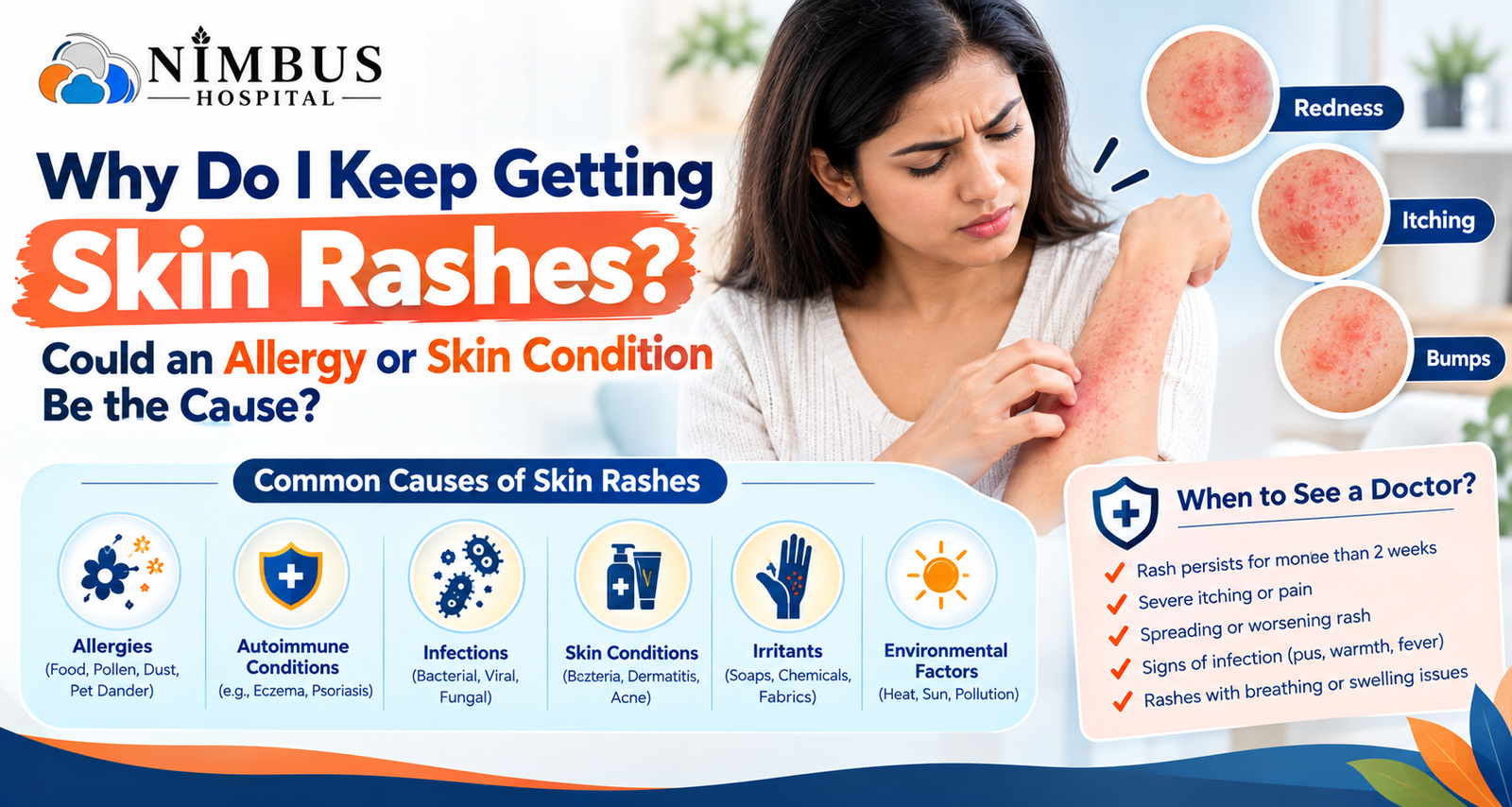
A rash is not a disease by itself. It is a skin symptom that can have several different causes. Common reasons include:
1. Skin Allergy
Allergic reactions may cause itching, redness, bumps or hives. Some people develop symptoms after exposure to particular foods, medicines, cosmetics, dust, pollen or other allergens.
2. Contact Dermatitis
Repeated contact with soaps, detergents, perfumes, cosmetics or hair products can irritate the skin and cause redness, itching or burning.
3. Eczema
Eczema can cause dry, itchy and irritated skin. Symptoms may come and go and can become worse with dryness, irritants or other triggers.
4. Fungal Infections
Fungal infections can cause itching, redness, scaling or ring-shaped patches. Sweat, humidity, tight clothing and incomplete treatment can increase the risk of recurrence.
5. Hives or Urticaria
Hives are raised, itchy skin patches that can appear suddenly and may disappear within hours. Allergies, infections, medicines and other triggers can sometimes contribute to them.
Nimbus Hospital’s skin-care information includes itchy rashes and hives, eczema, fungal infections and other common skin concerns among conditions requiring proper evaluation.
How Can You Tell If a Rash Is Due to an Allergy?
It can be difficult to identify an allergy based only on how the rash looks. However, certain patterns may provide useful clues.
An allergy may be more likely when:
- The rash appears after exposure to a particular product or substance.
- Itching is a major symptom.
- Hives appear suddenly.
- Symptoms improve after avoiding a suspected trigger.
- The rash occurs along with swelling or other allergy symptoms.
- Similar reactions happen repeatedly.
Keeping a record of when the rash appears, what you ate, which products you used and where you were can help the doctor identify possible triggers.
What Symptoms Should You Pay Attention To?
Recurring rashes can appear in different forms depending on their cause.
Common symptoms include:
- Itching
- Redness
- Burning or irritation
- Dry or flaky skin
- Raised bumps
- Hives
- Scaling
- Cracks in the skin
- Oozing or signs of infection
Nimbus Hospital recommends clinical examination to assess the pattern of the rash and look for signs suggesting allergy or infection before deciding on treatment.
Can Dust, Pollen or Other Allergens Cause Skin Problems?
Yes. Some people can develop allergic symptoms after exposure to environmental allergens such as dust or pollen. Other substances, including soaps, detergents, perfumes and cosmetics, can directly irritate sensitive skin.
Nimbus Hospital also provides specialised allergy evaluation and immunotherapy through its ENT department, including allergy profiling and management for conditions associated with dust, pollen and food allergies.
The important step is to identify the suspected trigger instead of repeatedly treating the rash without understanding why it keeps returning.
How Is the Cause of a Rash Diagnosed?
Diagnosis usually starts with a detailed clinical examination. The doctor may ask:
- When did the rash first appear?
- How often does it return?
- Is it itchy, painful or burning?
- Did you recently change soap, detergent or cosmetics?
- Did you eat anything unusual?
- Have you taken any new medicines?
- Does sweating or heat make it worse?
- Has anyone else at home developed similar symptoms?
Depending on the symptoms, additional testing may be recommended. Nimbus Hospital’s skin-care approach includes clinical examination, evaluation for allergy or infection clues and basic tests when infection is severe or systemic symptoms are present.
For suspected allergies, the hospital’s ENT department lists allergy profiling, skin-prick testing and specific IgE testing among available diagnostic options.
How Are Recurring Skin Rashes Treated?
Treatment depends on the underlying cause. A rash caused by allergy may require a different approach from eczema or fungal infection.
Depending on the diagnosis, treatment may include:
Trigger Avoidance
Identifying and avoiding the substance responsible for the reaction can help reduce repeated flare-ups.
Medicines
Doctors may recommend appropriate medicines for itching, allergy, infection or inflammation depending on the condition.
Topical Treatment
Creams or lotions may be prescribed according to the type and severity of the skin problem.
Skin-Care Routine
Using gentle cleansers, moisturising regularly and avoiding harsh products can support healthier skin, particularly when dryness or irritation is contributing to symptoms.
Allergy Management
When a specific allergy is identified, long-term management may include trigger control and, in selected cases, allergy immunotherapy under specialist guidance.
Why Choose Nimbus Hospital for Allergy and Skin Care?
Recurring rashes require more than simply applying a cream whenever symptoms appear. The first priority is understanding whether the problem is caused by allergy, infection, eczema, irritation or another condition.
Nimbus Hospital follows a patient-focused approach that includes clinical evaluation, appropriate diagnostic support, personalised treatment and follow-up. Its services include both allergy care and dermatology support for rashes, itching, eczema and infections.
Patients can benefit from:
- Allergy evaluation and trigger identification
- Skin-condition assessment
- Allergy testing when required
- Personalised treatment plans
- Topical and medication-based treatment when appropriate
- Preventive skincare guidance
- Follow-up for recurring problems
- Emergency support for severe allergic reactions
When Is a Skin Rash an Emergency?
Most rashes are not emergencies, but some allergic or infectious reactions can become serious.
Seek immediate medical attention if a rash occurs with:
- Sudden swelling of the face or lips
- Difficulty breathing
- Widespread hives with other severe symptoms
- Rapidly spreading redness
- High fever
- Severe pain
- Pus or significant oozing
- Spreading blisters
- Severe swelling
Nimbus Hospital specifically identifies facial or lip swelling, breathing difficulty and sudden widespread hives as warning signs of a severe allergic reaction.
Its 24×7 emergency service also provides urgent assessment and stabilisation for allergic reactions involving swelling or other serious symptoms.
What Can You Do to Prevent Repeated Rashes?
A few simple habits may help reduce flare-ups:
- Use gentle soaps and cleansers.
- Avoid products that repeatedly trigger irritation.
- Keep the skin moisturised if it is dry.
- Avoid scratching the affected area.
- Keep sweaty areas clean and dry.
- Do not share towels, combs or personal skin-care items.
- Complete prescribed treatment rather than stopping as soon as symptoms improve.
- Keep a record of suspected allergy triggers.
If the rash keeps returning despite these measures, professional evaluation is recommended.
When Should You See a Doctor?
You should consider medical evaluation when the rash is recurring, spreading, very itchy, painful, or not improving with basic care. You should also seek advice if you cannot identify what is triggering the reaction.
For people searching for Allergy Treatment in Solan, Nimbus Hospital offers allergy evaluation, skin-condition assessment, diagnostic support and personalised management based on the suspected cause.
Final Thoughts
Recurring skin rashes can be caused by allergies, eczema, fungal infections, irritation, hives or other skin conditions. Because these problems can look similar, treating the rash without identifying its cause may provide only temporary relief.
A proper clinical assessment can help determine whether an allergy, infection or another skin condition is responsible. Identifying triggers and following an appropriate treatment and prevention plan can also help reduce repeated flare-ups.
FAQ’s
1. Why do my skin rashes keep coming back?
Allergies, eczema, fungal infections, irritants and recurring exposure to triggers can cause repeated rashes.
2. Can food allergies cause skin rashes?
Yes. Food allergies can cause hives or other allergic skin reactions in some people.
3. Can dust cause skin allergies?
Dust can trigger allergic symptoms in sensitive individuals, although the exact cause varies.
4. Should I use a cream for every rash?
No. Different rashes need different treatments, so diagnosis is important before using medication.
5. When is a rash an emergency?
Rash with breathing difficulty, facial swelling or widespread hives requires immediate medical attention.