High blood sugar is not always caused by eating too many sweets. Many people are surprised when their blood sugar report comes back higher than normal, especially when they feel completely healthy. Diabetes can develop because of a combination of genetics, insulin resistance, excess weight, lifestyle habits, age, certain medical conditions and other risk factors. If your blood sugar remains high or you are experiencing symptoms such as excessive thirst, frequent urination, unexplained weight changes or unusual tiredness, it is important to get evaluated by a qualified doctor. Consulting a Sugar specialist doctor Solan can help identify the reason behind high blood sugar and create a treatment plan based on your health, lifestyle and medical needs.
What Does High Blood Sugar Mean?
Blood sugar, also called blood glucose, is the main source of energy for the body’s cells. Insulin, a hormone produced by the pancreas, helps glucose move from the bloodstream into cells.
When the body does not produce enough insulin or cannot use insulin effectively, glucose starts building up in the blood. Over time, persistently high blood sugar can affect different organs and increase the risk of complications.
A single high reading does not necessarily mean that a person has diabetes. Doctors may recommend repeat testing and tests such as fasting blood glucose, post-meal blood glucose and HbA1c depending on the individual’s symptoms and medical history.
What Causes Blood Sugar to Become High?
There is no single reason why everyone’s blood sugar becomes high. Several factors can contribute.
Insulin resistance occurs when the body’s cells do not respond effectively to insulin. The pancreas may initially produce more insulin to compensate, but over time blood glucose can begin to rise.
1. Insulin Resistance
Insulin resistance is commonly associated with excess weight, physical inactivity and metabolic problems.
2. Family History
Having close family members with diabetes can increase your risk. However, having a family history does not mean that diabetes is unavoidable. Healthy eating, regular physical activity, maintaining a healthy weight and appropriate medical monitoring can help reduce risk.
3. Unhealthy Eating Habits
Regular consumption of highly processed foods, sugary beverages and excessive calories can contribute to weight gain and poor blood sugar control.
This does not mean that people with diabetes can never enjoy their favourite foods. Instead, portion control, balanced meals and appropriate dietary guidance are important parts of long-term management.
4. Lack of Physical Activity
Regular movement helps the body use glucose more efficiently. A sedentary lifestyle can contribute to insulin resistance and weight gain.
Even simple activities such as walking can be useful when included consistently and when appropriate for your health condition.
5. Stress and Poor Sleep
Long-term stress and inadequate sleep can affect hormones involved in metabolism and may make blood sugar management more difficult. These factors are particularly important for people who already have diabetes or are at increased risk.
6. Age and Other Health Conditions
The risk of type 2 diabetes generally increases with age. Conditions such as obesity, hypertension and other metabolic problems may also occur alongside diabetes.
For this reason, diabetes care should not focus only on the sugar reading. A complete assessment of blood pressure, weight, cholesterol, kidney health and other relevant factors may be necessary.
What Are the Symptoms of High Blood Sugar?
Some people with high blood sugar have no obvious symptoms, particularly during the early stages. Others may experience:
- Increased thirst
- Frequent urination
- Increased hunger
- Unusual tiredness
- Blurred vision
- Slow-healing wounds
- Unexplained weight loss
- Recurrent infections
If these symptoms continue, medical evaluation is advisable. Early identification can help with timely treatment and reduce the risk of complications.
How Is Diabetes Diagnosed?
Diabetes should be diagnosed through appropriate medical evaluation rather than symptoms alone.
Depending on the situation, a doctor may recommend blood glucose testing and HbA1c testing. Additional investigations may be advised based on the patient’s age, symptoms, existing health conditions and risk factors.
Nimbus Hospital provides a computerized laboratory and diagnostic support under one roof. Its MD Medicine department specifically lists diabetes management, blood sugar testing and long-term chronic disease monitoring among its services.
The goal is to understand the patient’s overall health rather than treating one abnormal report in isolation.
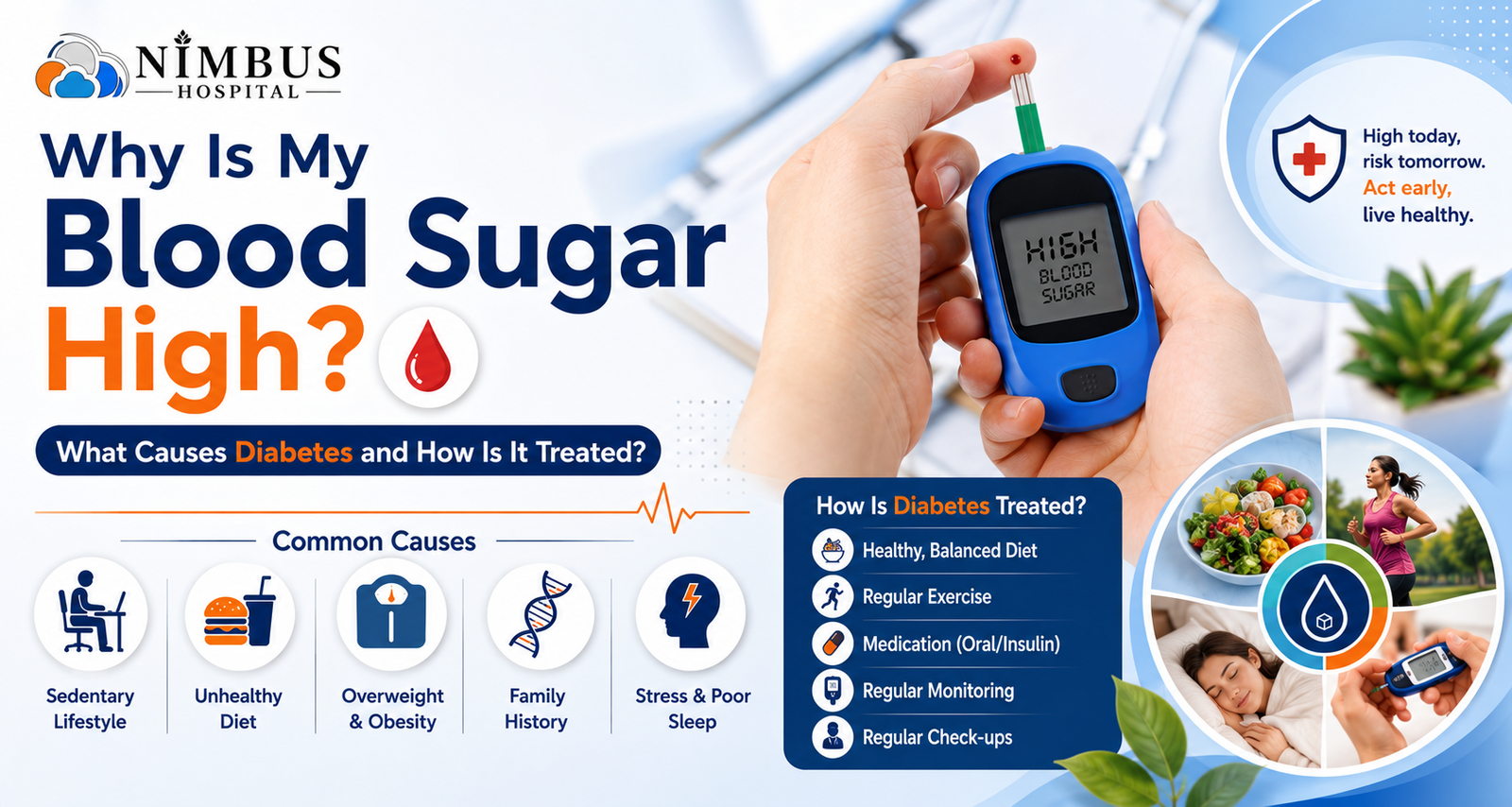
How Is Diabetes Treated?
Diabetes treatment depends on the type of diabetes, blood sugar levels, age, medical history, existing complications and individual lifestyle.
Treatment may include:
Lifestyle Changes
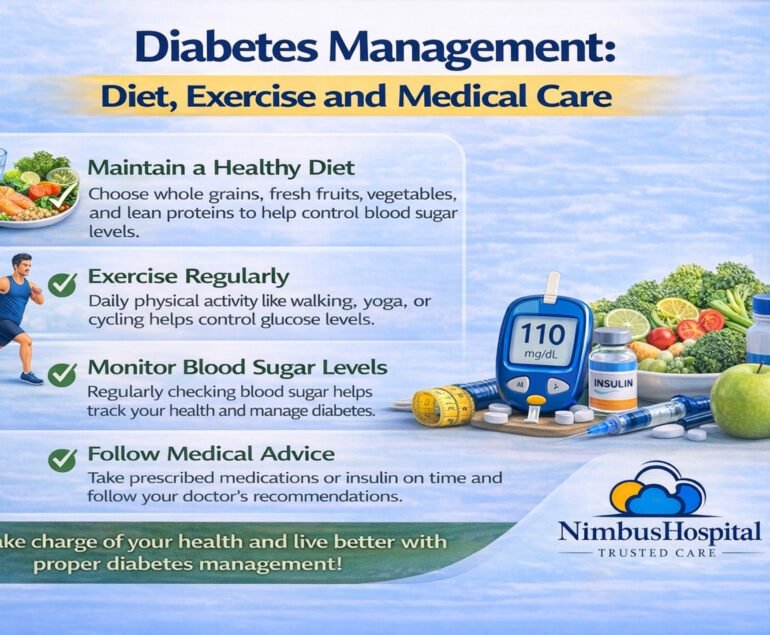
A balanced diet, regular physical activity, adequate sleep and weight management can play an important role in blood sugar control.
Patients should avoid making extreme dietary changes without professional guidance. A sustainable eating pattern that fits the person’s routine is usually more practical for long-term management.
Medicines
Some people can manage early-stage type 2 diabetes through lifestyle changes, while others require medicines. The choice of medicine depends on the individual’s medical condition and glucose levels.
Medicines should be taken exactly as prescribed. Patients should not stop or change diabetes medication simply because they feel better or because a single sugar reading has improved.
Regular Monitoring
Diabetes management requires ongoing monitoring. Doctors may review blood sugar readings, HbA1c, blood pressure, weight and other relevant health parameters during follow-ups.
Nimbus Hospital’s approach includes consultation, targeted investigations, personalised treatment, diet and routine guidance, followed by monitoring and adjustment of the treatment plan when required.
Can Diabetes Be Controlled Without Medicine?
This depends on the individual.
Some people with early type 2 diabetes may improve their blood sugar levels significantly through weight management, dietary changes and regular physical activity. However, others need medication from the beginning or may require medication later.
The important point is that treatment should be based on medical assessment rather than advice from social media, friends or unverified home remedies.
If you have persistent high sugar readings, speaking with a Sugar specialist doctor Solan can help determine whether lifestyle changes alone are appropriate or whether medication and closer monitoring are needed.
Why Choose Nimbus Hospital for Diabetes Care?
Nimbus Hospital provides comprehensive healthcare with a patient-first approach and supports the management of chronic conditions such as diabetes through its MD Medicine department. The hospital combines consultation, diagnostic services, personalised treatment and follow-up care.
Experienced Medical Care
Nimbus Hospital’s MD Medicine service focuses on adult healthcare, including diabetes, thyroid disorders, hypertension, obesity and other metabolic conditions.
Advanced Diagnostic Support
The hospital provides a computerized pathology laboratory along with other diagnostic facilities. Blood sugar and related investigations can be performed as recommended by the doctor.
Personalised Treatment
Diabetes does not affect every patient in the same way. Nimbus Hospital describes its care approach as personalised according to the patient’s medical condition, age, lifestyle and long-term health goals.
Long-Term Follow-Up
Managing diabetes is a continuous process. Regular follow-up allows doctors to assess treatment response, review reports and make changes when necessary. Nimbus Hospital specifically highlights chronic disease monitoring and long-term follow-up as part of its MD Medicine care.
Multi-Specialty Support
Diabetes can affect or occur alongside other health conditions such as high blood pressure, heart problems, kidney issues and obesity. Nimbus Hospital provides multiple medical services under one roof, allowing coordinated care when additional evaluation is needed.
24×7 Emergency Support
Nimbus Hospital provides 24×7 emergency support, which is important for patients who develop serious symptoms or require urgent medical attention.
When Should You See a Doctor for High Blood Sugar?
You should consider medical consultation if your blood sugar repeatedly remains above the recommended range, you develop symptoms of diabetes, you have a strong family history, or you have other risk factors such as obesity or high blood pressure.
Urgent medical attention may be required if very high blood sugar is accompanied by severe weakness, vomiting, confusion, difficulty breathing, dehydration or altered consciousness.
Do not rely on symptoms alone to judge whether your diabetes is controlled. A person can feel perfectly well while blood sugar remains elevated.
Final Thoughts
High blood sugar is a condition that deserves proper evaluation rather than guesswork. Diabetes can develop because of several factors, and the right treatment depends on the individual’s health, blood sugar levels, lifestyle and medical history.
The good news is that diabetes can often be managed effectively with appropriate medical care, healthy lifestyle habits, regular monitoring and medicines when required. Early diagnosis and consistent follow-up can make a significant difference in preventing complications and maintaining a better quality of life.
If you are experiencing repeated high sugar readings or symptoms associated with diabetes, consult a qualified doctor for an appropriate evaluation and personalised treatment plan.
FAQs
1. Why is my blood sugar high?
High sugar can result from insulin resistance, diet, stress, genetics, or lack of activity.
2. What are common diabetes symptoms?
Excessive thirst, frequent urination, tiredness, and blurred vision are common symptoms.
3. Can diabetes be controlled?
Yes, diabetes can often be controlled with diet, exercise, medicines, and regular monitoring.
4. When should I see a diabetes doctor?
See a doctor if your blood sugar remains high or symptoms keep occurring.
5. How can I manage high blood sugar?
Follow a balanced diet, stay active, take prescribed medicines, and monitor sugar regularly.