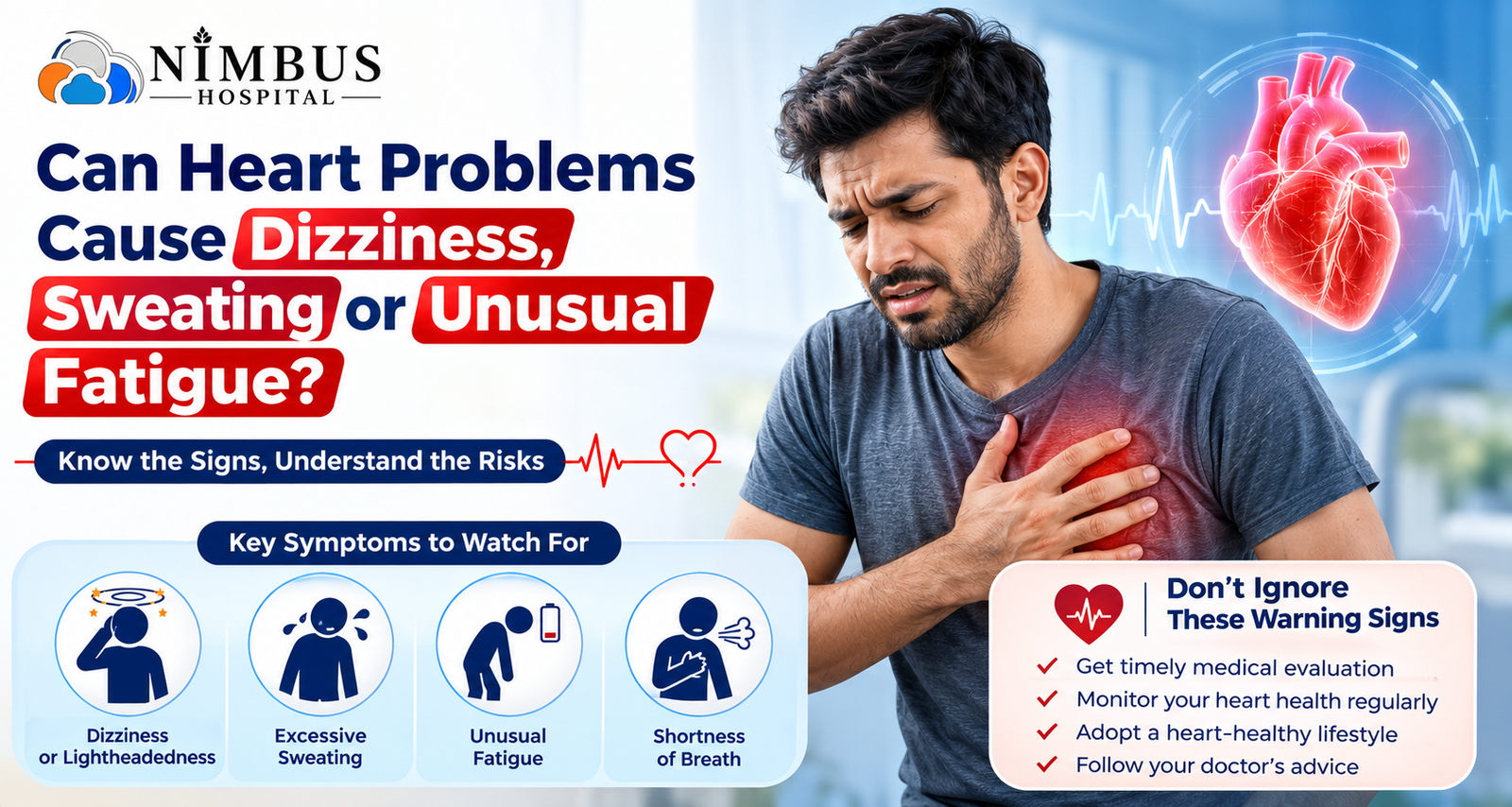
Dizziness, sweating and unusual fatigue are symptoms that people often associate with stress, weakness, dehydration or lack of sleep. However, in some cases, these symptoms can also be linked to heart problems. The heart and circulatory system are responsible for delivering oxygen-rich blood throughout the body, so problems affecting the heart can sometimes cause symptoms beyond the chest. If dizziness, sudden sweating or unexplained tiredness occurs repeatedly particularly with chest discomfort, breathlessness or palpitations it is important to seek medical evaluation. Timely Heart Problems Treatment in Solan can help identify the underlying cause and determine appropriate care.
Can Heart Problems Cause Dizziness?
Yes, certain heart conditions can cause dizziness or a feeling of light-headedness.
Dizziness may occur when the brain does not receive enough blood flow or oxygen. Heart rhythm problems, low blood pressure and some cardiovascular conditions can affect how effectively the heart pumps blood.
Some people may describe the sensation as:
- Feeling light-headed
- Feeling unsteady
- Feeling as though they may faint
- Brief episodes of weakness
- Dizziness after standing or during physical activity
Not every episode of dizziness is caused by the heart. Inner-ear problems, dehydration, low blood sugar, anaemia and certain medicines can also cause dizziness. This is why proper evaluation is important.
Why Can Heart Problems Cause Sweating?
Sudden or unexplained sweating can sometimes occur when the body is responding to physical stress.
During certain cardiac events, the body’s nervous system may become activated, causing sweating even when the person is not exercising or in a hot environment.
Cold sweating, particularly when accompanied by chest pressure, breathlessness, nausea, dizziness or unusual weakness, should not be ignored.
If these symptoms appear suddenly or are severe, emergency medical attention may be necessary.
Can Unusual Fatigue Be a Sign of a Heart Problem?
It can be, particularly when fatigue is new, persistent or significantly different from your normal energy levels.
When the heart cannot pump blood effectively, the body may not receive adequate oxygen and nutrients during activity. As a result, everyday tasks that previously felt easy may start causing unusual tiredness or weakness.
Some people may notice:
- Getting tired while walking short distances
- Reduced exercise tolerance
- Breathlessness during routine activities
- Feeling weak without an obvious reason
- Needing more rest than usual
Fatigue alone does not confirm a heart problem, but persistent unexplained fatigue deserves medical assessment.
Which Symptoms Along With Dizziness Need Attention?
Dizziness becomes more concerning when it occurs together with other cardiovascular symptoms.
Seek prompt medical evaluation if dizziness occurs with:
- Chest pain or pressure
- Shortness of breath
- Unusual sweating
- Fast or irregular heartbeat
- Fainting or near-fainting
- Sudden weakness
- Severe fatigue
- Pain spreading to the arm, shoulder, back, neck or jaw
A combination of symptoms can provide important information to the doctor and should not simply be attributed to stress or tiredness.
What Heart Conditions Can Cause These Symptoms?
Several cardiovascular conditions can potentially cause dizziness, sweating or fatigue.
Heart Rhythm Problems
Abnormal heart rhythms can make the heart beat too quickly, too slowly or irregularly. This may reduce effective blood circulation and cause dizziness, weakness or palpitations.
Low Blood Pressure
A significant drop in blood pressure can cause light-headedness, particularly when standing up. It can have several causes, including medicines, dehydration and cardiovascular problems.
Heart Failure
Heart failure can cause symptoms such as persistent tiredness, reduced ability to exercise and breathlessness. Some people may also develop swelling in the legs or ankles.
Coronary Artery Disease
Reduced blood flow to the heart muscle can cause chest discomfort, breathlessness or reduced exercise tolerance. Symptoms can vary considerably between individuals.
How Are Heart Problems Diagnosed?
A doctor usually begins with a detailed medical history and physical examination. Depending on the symptoms and suspected condition, investigations may include blood pressure measurement, ECG, blood tests, chest imaging or other cardiac tests.
Nimbus Hospital provides cardiac and respiratory medical services along with diagnostic support. Its website lists ECG, X-ray, computerized laboratory facilities and medical consultation among its available services.
The appropriate tests depend on the individual’s symptoms, age, medical history and risk factors. Not every patient requires the same investigations.
What Is the Treatment for Heart Problems?
Treatment depends entirely on the underlying heart condition.
Depending on the diagnosis, management may include lifestyle changes, medicines, monitoring, treatment of associated conditions or specialist cardiac care.
Controlling risk factors such as high blood pressure, diabetes, high cholesterol, smoking, obesity and physical inactivity can also be an important part of cardiovascular health.
Medicines should be taken only as prescribed, and patients should not stop cardiac medicines without discussing it with their doctor.
Why Choose Nimbus Hospital for Heart Care?
Nimbus Hospital provides medical care for cardiovascular and respiratory concerns, supported by diagnostic facilities. Its Cardiac & Respiratory Physician service focuses on evaluating symptoms such as chest discomfort, breathlessness and other heart or respiratory complaints.
The hospital also provides ECG and other diagnostic services that may be recommended during evaluation.
Its patient-focused approach includes medical consultation, appropriate investigations, personalised treatment planning and follow-up care. Having consultation and diagnostic facilities available within the same healthcare setting can make evaluation more convenient for patients.
For people seeking Heart Problems Treatment in Solan, proper diagnosis is particularly important because symptoms such as dizziness, sweating and fatigue can have several possible causes.
When Is Dizziness or Sweating an Emergency?
Sudden dizziness or sweating should be treated seriously when accompanied by symptoms that may indicate an acute cardiac problem.
Seek emergency medical help immediately if you experience severe chest pain or pressure, difficulty breathing, fainting, sudden severe weakness, or other rapidly worsening symptoms.
Do not drive yourself if you are experiencing severe symptoms. Emergency assessment can help determine whether the problem is cardiac or caused by another serious condition.
Final Thoughts
Dizziness, sweating and unusual fatigue do not always mean that you have a heart problem. However, when these symptoms are new, unexplained, persistent or occur together with chest discomfort, breathlessness or palpitations, they should not be ignored.
A proper medical evaluation can help determine whether the symptoms are related to the heart, blood pressure, blood sugar, anaemia, medications or another condition. Early assessment is especially important for people with risk factors such as diabetes, high blood pressure, high cholesterol, smoking or a family history of heart disease.
FAQs
1. Can heart problems cause dizziness?
Yes, certain heart rhythm and circulation problems can cause dizziness or light-headedness.
2. Is sudden sweating a heart symptom?
Sudden cold sweating can sometimes occur with serious heart problems.
3. Can heart problems cause constant fatigue?
Yes, some cardiovascular conditions can cause unusual or persistent fatigue.
4. When is dizziness an emergency?
Dizziness with chest pain, severe breathlessness or fainting requires urgent medical attention.
5. Which test can detect heart problems?
An ECG is commonly used, while additional tests depend on the suspected condition.