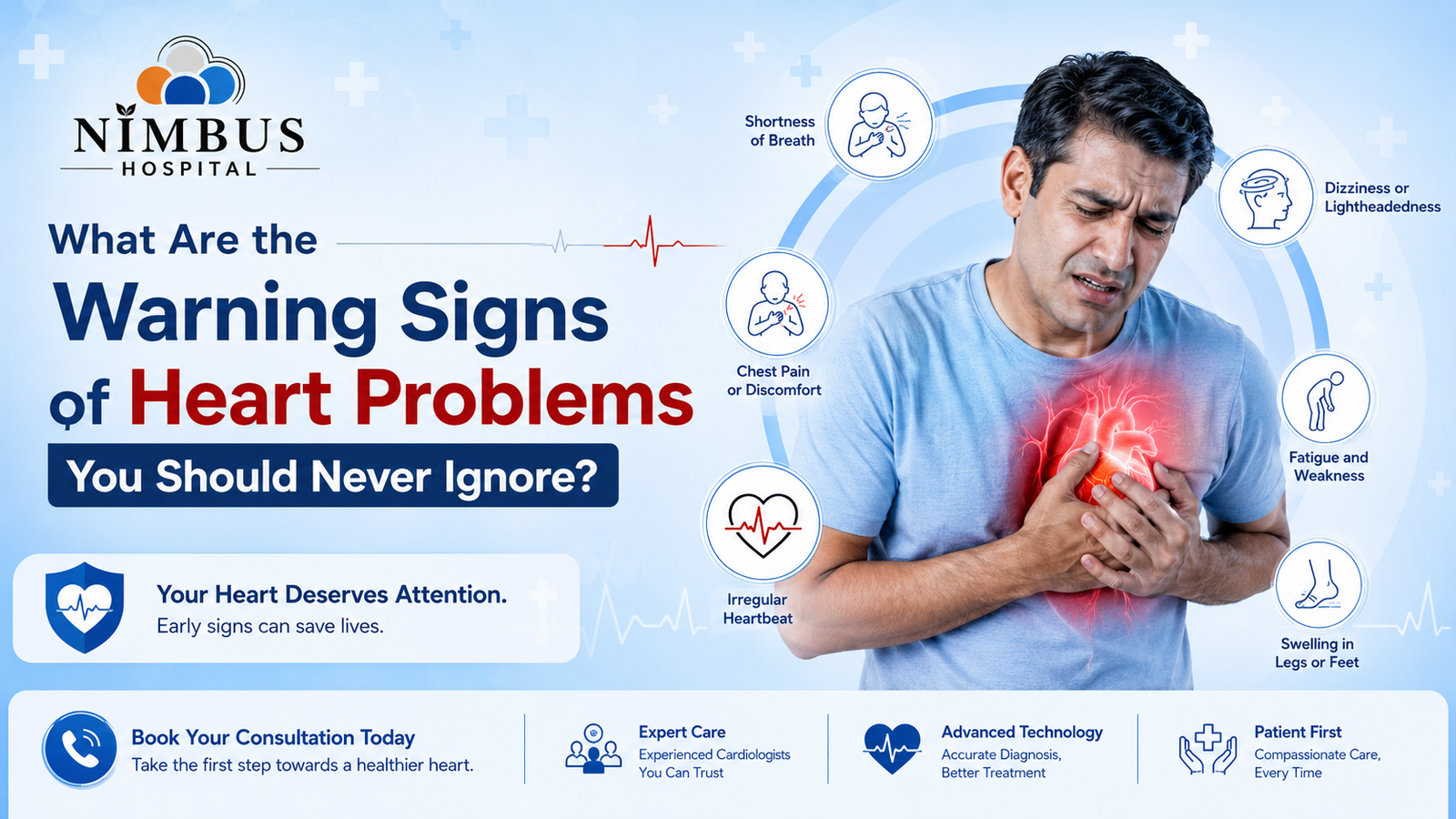
Heart problems do not always begin with severe chest pain. Sometimes the first signs can be breathlessness while walking, unusual tiredness, palpitations, dizziness, swelling in the feet or a feeling of heaviness in the chest. Recognising these symptoms early can help you seek medical attention before the condition becomes more serious. If you are searching for the Best Heart Problems Hospital in Solan, Nimbus Hospital provides heart and cardiac evaluation through its cardiac and respiratory physician services, supported by ECG, Echo, blood tests and 24×7 emergency care.
Why Should You Never Ignore Heart Symptoms?
The heart supplies blood and oxygen to every part of the body, so problems affecting its function can produce symptoms in different ways. A person may notice chest discomfort, breathing difficulty, an irregular heartbeat or unexplained weakness.
Not every chest pain or palpitation means a heart problem. Acidity, anxiety, muscle pain and other conditions can cause similar symptoms. However, it is important not to assume the cause yourself, particularly when symptoms are new, severe, recurrent or getting worse.
Nimbus Hospital focuses on early evaluation and appropriate diagnosis. Its cardiac care services include assessment of chest symptoms, palpitations, blood-pressure-related concerns and heart-risk factors such as diabetes and high cholesterol.
1. Chest Pain, Pressure or Heaviness
Chest discomfort is one of the most important symptoms to take seriously.
It may feel like pressure, heaviness, tightness, burning or pain in the chest. In some cases, discomfort may spread towards the arm, jaw, back or shoulder.
Chest pain can have several causes, including acidity and muscle-related problems. However, prolonged or severe chest pressure, particularly when accompanied by sweating, nausea, weakness or breathlessness, requires urgent medical evaluation.
Nimbus Hospital specifically identifies chest pain or pressure lasting around 10–15 minutes, particularly with other warning symptoms, as a reason for immediate help.
2. Unusual Shortness of Breath
Getting breathless after strenuous exercise can be normal. But breathlessness during routine activities or while resting should not be ignored.
Heart and lung conditions can both cause breathing difficulties. Nimbus Hospital’s Cardiac & Respiratory Physician service evaluates shortness of breath, chest discomfort and other heart-lung symptoms and can recommend investigations such as ECG, Echo, PFT or imaging when required.
Severe breathlessness, particularly when it appears suddenly or is associated with chest pain, bluish lips or collapse, should be treated as an emergency.
3. Fast or Irregular Heartbeat
A racing, pounding or irregular heartbeat is commonly described as palpitations.
Palpitations can sometimes occur because of stress, caffeine, lack of sleep or other non-cardiac causes. However, repeated palpitations should be assessed, especially when they occur with dizziness, fainting, chest discomfort or breathlessness.
Nimbus Hospital lists ECG and, when required, Holter monitoring among the investigations that may be used for heart-related evaluation.
4. Dizziness or Fainting
Occasional dizziness may have many causes, including dehydration or low blood pressure. But unexplained dizziness or fainting can sometimes be associated with heart rhythm or circulation problems.
A fainting episode should not simply be dismissed, particularly if it happens during physical activity or occurs with chest pain, palpitations or breathing difficulty.
If someone becomes unconscious or collapses, immediate emergency medical care is required.
5. Unusual Tiredness or Weakness
Persistent fatigue can be easy to overlook because it may be blamed on work, stress or poor sleep.
However, unusual tiredness that continues despite adequate rest may deserve medical evaluation, particularly when accompanied by breathlessness, chest discomfort, dizziness or reduced ability to perform normal activities.
Nimbus Hospital’s internal medicine services include evaluation of general weakness and fatigue as well as heart-risk screening and chest discomfort assessment.
6. Swelling in the Feet or Legs
Swelling around the ankles, feet or legs can have several causes. In some situations, it can be associated with problems affecting fluid balance or heart function.
If swelling is persistent, worsening or accompanied by breathlessness or unusual fatigue, consult a healthcare professional instead of relying only on home remedies.
Nimbus Hospital includes leg swelling among the symptoms evaluated by its Cardiac & Respiratory Physician service.
7. Cold Sweating, Nausea or Extreme Weakness
Cold sweating, nausea and sudden extreme weakness can occur alongside serious heart-related symptoms.
These signs become particularly concerning when they appear with chest pressure, breathlessness or pain that spreads to the arm, jaw or back.
Do not wait for the symptoms to become unbearable before seeking help.
8. Sudden Weakness or Speech Problems
Heart health and stroke risk are closely connected. Sudden weakness or numbness of the face, arm or leg, slurred speech, confusion or a sudden severe headache can be warning signs of a stroke.
These symptoms require immediate emergency assessment.
Nimbus Hospital’s 24×7 emergency service specifically lists sudden facial weakness, arm weakness, slurred speech, confusion and sudden severe headache among emergency warning signs.
Who Is More at Risk of Heart Problems?
Heart risk is not limited to older adults. Several factors can increase the likelihood of cardiovascular problems, including:
- High blood pressure
- Diabetes
- High cholesterol
- Smoking
- Excessive alcohol use
- Physical inactivity
- Excess weight
- Family history of heart disease
- Long-term stress
Nimbus Hospital’s heart-care information specifically highlights high BP, diabetes, high cholesterol, smoking, alcohol, stress and family history as important risk factors.
This is why regular monitoring of blood pressure, blood sugar and cholesterol can be useful, especially for people with known risk factors.
How Are Heart Problems Evaluated?
A doctor generally begins with your symptoms, medical history, medications, lifestyle and vital signs. Based on the initial assessment, specific tests may be recommended.
At Nimbus Hospital, heart-related evaluation may include:
ECG: Helps assess heart rhythm and identify certain signs associated with cardiac problems.
2D Echo: Helps evaluate heart function and valves.
Blood Tests: Sugar, lipid profile and cardiac markers may be advised depending on the situation.
TMT/Stress Test: May be recommended when clinically appropriate.
BP Monitoring or Holter: May be used when blood-pressure or rhythm monitoring is needed.
The purpose of testing is not simply to order every possible investigation. The appropriate tests depend on the patient’s symptoms, risk factors and clinical assessment.
Heart Care at Nimbus Hospital
Nimbus Hospital provides cardiac and respiratory physician support for patients experiencing chest discomfort, palpitations, breathlessness and heart-related risk factors. Its approach combines consultation with diagnostic support and personalised treatment planning.
The hospital’s MD Medicine department also provides heart-risk screening, hypertension management and chest discomfort evaluation as part of internal medicine care.
This allows the patient’s symptoms to be considered in the context of their overall health rather than treating one symptom in isolation.
Why Choose Nimbus Hospital for Heart Care?
Heart and Respiratory Physician Support
Nimbus Hospital provides specialist evaluation for heart and lung symptoms, including chest discomfort, palpitations, breathlessness and high-BP-related concerns.
Diagnostic Support
The hospital provides ECG, Echo, blood tests and other investigations when recommended by the doctor. Its broader diagnostic setup also includes a computerized pathology laboratory and X-ray services.
Personalised Treatment
Treatment depends on the actual diagnosis. Nimbus Hospital’s heart-care approach includes lifestyle and risk-factor control, medicines when required and follow-up monitoring.
24×7 Emergency Care
For serious symptoms, Nimbus Hospital has 24×7 emergency support with rapid triage, stabilisation, ECG and other diagnostic support, along with ICU/HDU backup when required.
Patient-First Approach
Nimbus Hospital describes its care model around clear diagnosis, personalised treatment, supportive follow-up and patient-focused healthcare.
When Should You Go to the Emergency Department?
Do not delay emergency care if you experience:
- Severe or persistent chest pain
- Chest pressure with sweating or nausea
- Severe breathlessness
- Fainting or collapse
- Bluish lips or signs of very low oxygen
- Sudden weakness or facial drooping
- Slurred speech or confusion
Nimbus Hospital’s emergency department operates 24×7 and specifically identifies chest pain, severe breathlessness, unconsciousness and stroke symptoms as situations requiring urgent care.
If symptoms are severe, use an ambulance or appropriate medical transport where available rather than driving yourself.
Final Thoughts
Heart problems can sometimes give warning signs before becoming a major emergency. Chest pressure, breathlessness, palpitations, dizziness, unusual fatigue, swelling and sudden weakness should not be routinely ignored.
At the same time, symptoms alone cannot confirm a heart condition. A proper medical assessment is needed to determine whether the cause is cardiac, respiratory, digestive, muscular or related to another health problem.
For people searching for the Best Heart Problems Hospital in Solan, Nimbus Hospital offers cardiac and respiratory physician consultation, heart-risk evaluation, ECG and Echo support, diagnostic facilities, personalised treatment and 24×7 emergency care.
FAQ’S
1. What is a serious heart warning sign?
Severe chest pain, breathlessness, sweating or fainting needs urgent attention.
2. Can acidity feel like heart pain?
Yes, but severe or new chest pain should be medically evaluated.
3. Are palpitations always dangerous?
No, but repeated palpitations with dizziness need evaluation.
4. When is breathlessness an emergency?
Sudden or severe breathlessness, especially with chest pain, needs urgent care.
5. Can diabetes increase heart risk?
Yes, diabetes is an important cardiovascular risk factor.